简体中文
简体中文  English
  日本語
日本語  한국어
한국어  Français
  Deutsch
  Español
  Português
  Русский
  العربية
  ไทย
ไทย  Tiếng Việt

EPDM vs NBR Rubber Expansion Joints: Material and Media Selection Guide
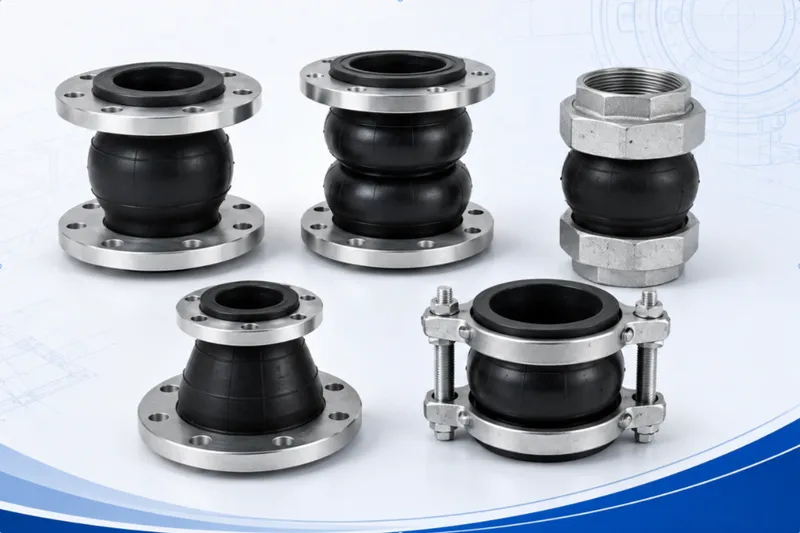
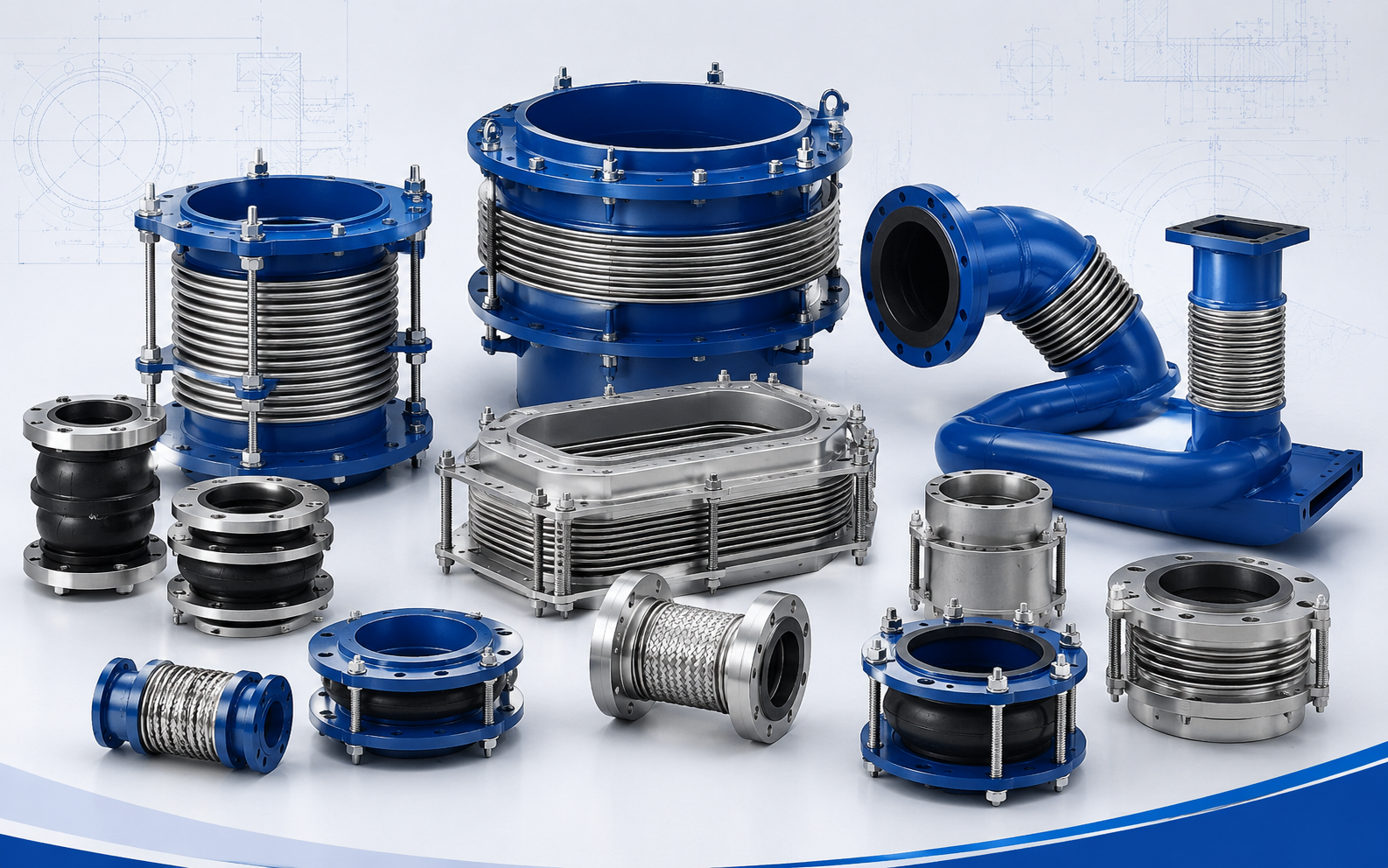
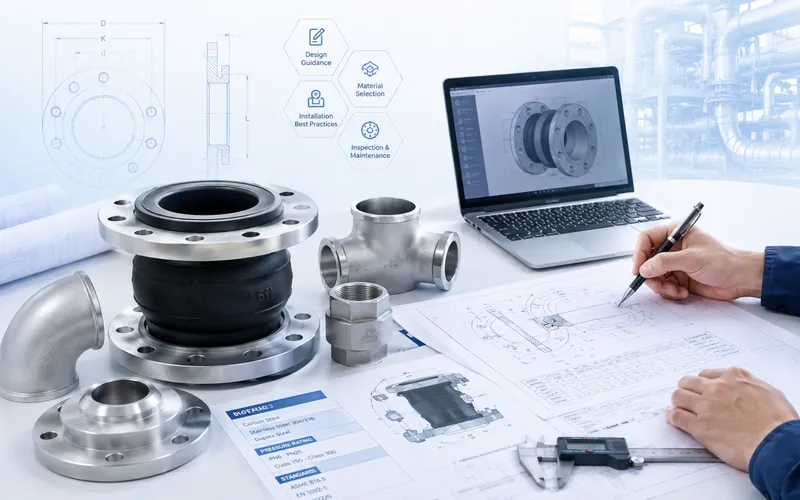
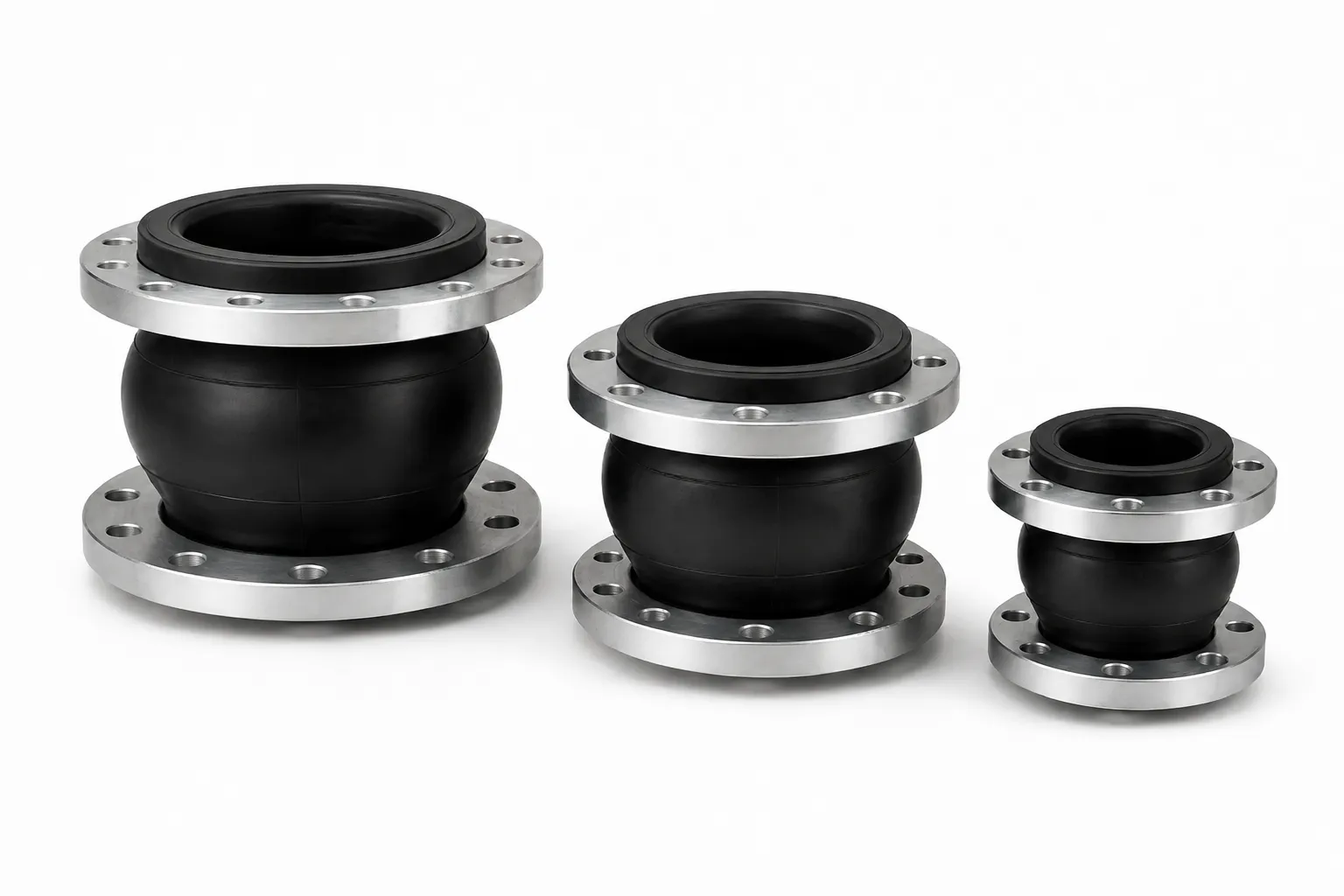
EPDM and NBR are two commonly used elastomer families for rubber expansion joints and flexible pipeline connectors. Both may be used in single sphere, double sphere, threaded or other rubber-joint constructions, but they do not provide the same resistance to water, oil, chemicals, ozone and outdoor exposure.
EPDM is generally considered for water service, selected HVAC systems and outdoor environments. NBR is more commonly evaluated for mineral oils, lubricants, fuels and selected oil-containing industrial fluids.
1. What Is EPDM?
EPDM is the common abbreviation for ethylene propylene diene monomer rubber. It is generally known for resistance to water, ozone, ageing and outdoor weather exposure.
Typical EPDM Advantages
- Commonly considered for clean water and general water systems;
- Generally good resistance to ozone and weathering;
- Can be evaluated for selected diluted acids, alkalis and cleaning fluids;
- Suitable for many continuously damp environments;
- Selected compounds can be evaluated for hot-water or steam service.
Main EPDM Limitations
Standard EPDM compounds are generally not suitable for mineral oils, petroleum-based lubricants, diesel fuel and other hydrocarbon oils.
EPDM identification alone also does not prove suitability for potable-water service. The specific compound and required project approvals must be confirmed.
2. What Is NBR?
NBR is the common abbreviation for nitrile butadiene rubber. Its main advantage is generally improved resistance to mineral oils, lubricants, fuels and selected non-polar petroleum-based fluids.
Typical NBR Advantages
- Commonly considered for selected mineral-oil and lubrication systems;
- Can be evaluated for fuel, hydraulic-oil and oil-containing services;
- Generally provides good mechanical and wear properties;
- Suitable for flexible connections requiring oil resistance.
Main NBR Limitations
- Weathering and ozone resistance are generally lower than EPDM;
- Outdoor service may require additional review of the outer cover;
- NBR is not compatible with every solvent or chemical;
- Ketones, esters, selected aromatic fluids and special chemicals require review;
- Different acrylonitrile contents produce different oil and low-temperature properties.
3. EPDM and NBR Comparison
| Property or Service | EPDM | NBR |
|---|---|---|
| Clean water | Generally preferred for initial evaluation | Selected compounds may be suitable |
| Mineral oils and lubricants | Standard compounds generally unsuitable | Generally more suitable |
| Diesel and selected fuels | Generally not recommended | Can be evaluated |
| Ozone and weathering | Generally good | Generally limited |
| Outdoor installation | Usually offers an advantage | Outer-cover ageing requires review |
| Selected diluted acids and alkalis | Can be evaluated | Can be evaluated under limited conditions |
| Mechanical and wear properties | Compound-dependent | Generally good |
| Potable water | Requires an approved compound and documentation | Requires an approved compound and documentation |
This comparison provides an initial direction only. Actual performance varies with formulation, hardness, reinforcement, manufacturing and the complete operating conditions.
4. Why EPDM Is Commonly Selected for Water Systems
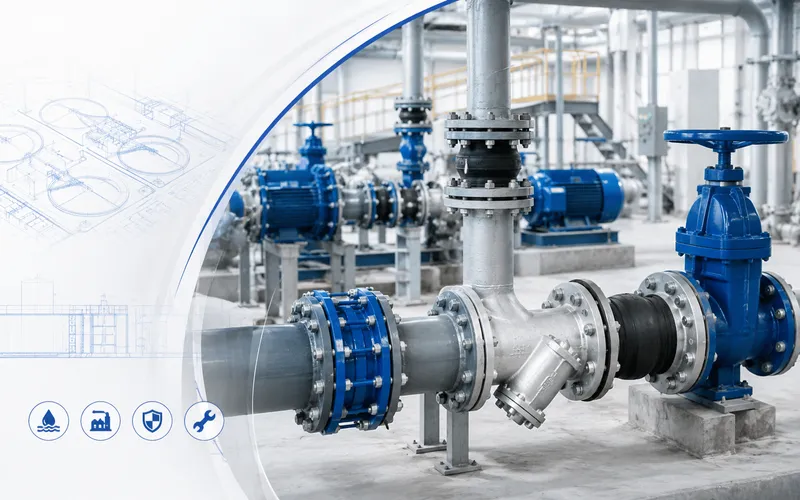
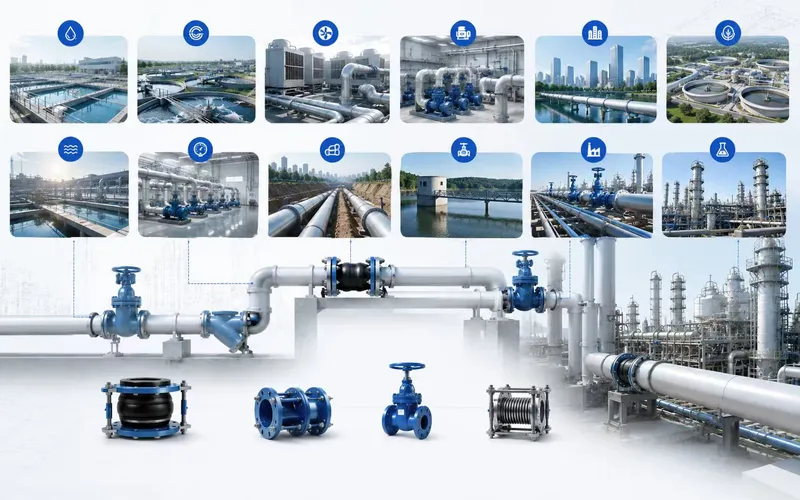
Municipal water, wastewater, circulation water, cooling water and HVAC systems often require resistance to water, ageing and environmental exposure. EPDM generally provides a useful combination of these properties.
Typical Applications
- Municipal water-supply and drainage pipelines;
- Pump suction and discharge connections;
- Water-treatment equipment;
- Chilled-water and cooling-water pipelines;
- General industrial circulating-water systems;
- Outdoor water pipelines.
Wastewater and process water may contain oil, solvents, cleaning agents or other chemicals. Water content alone is therefore not sufficient to confirm EPDM suitability.
5. Why NBR Is Commonly Considered for Oil Service
NBR generally provides better resistance than standard EPDM to mineral oils, lubricants, fuels and selected petroleum-based fluids.
Possible Application Directions
- Mineral-oil pipelines;
- Lubrication-oil circulation systems;
- Selected diesel and fuel lines;
- Selected hydraulic-oil systems;
- Equipment connections exposed to oil-containing media.
Oil resistance does not mean resistance to every oil. Synthetic lubricants, biofuels, aromatic fuels, complex additives and mixed solvents require separate compatibility review.
6. Can the Inner and Outer Rubber Layers Be Different?
In selected custom rubber expansion joints, the inner tube in contact with the process medium and the outer cover exposed to the environment may be evaluated separately.
An oil-containing medium may require an oil-resistant inner layer, while outdoor installation requires the outer cover to withstand ozone, sunlight and weathering.
The feasibility of different inner and outer compounds depends on the joint construction, reinforcement, bonding system and manufacturing process.
7. Do Not Identify the Elastomer by Colour
Black rubber is not automatically NBR or EPDM. Colour can be affected by carbon black, pigments, formulation and customer marking requirements.
Material verification should use:
- The purchase-order material requirement;
- The approved drawing or datasheet;
- Production-batch and raw-material records;
- Agreed material documentation;
- Specified testing or third-party inspection where required;
- Product marking and traceability records.
8. Temperature Capability Is Compound-Specific
The same base polymer can be formulated with different curing systems, hardness levels, reinforcements and additives. One universal temperature range should therefore not be applied to every EPDM or NBR expansion joint.
Provide the following information:
- Normal operating temperature;
- Maximum and minimum temperature;
- Continuous or short-duration exposure;
- Thermal cycling conditions;
- Fluid and ambient temperatures;
- Actual medium composition at temperature;
- Required operating or cycle life.
9. Preliminary Material Direction by Medium
| Medium or Environment | Initial Direction | Further Confirmation |
|---|---|---|
| Clean water and circulation water | EPDM is commonly evaluated first | Temperature, water chemistry and documents |
| Potable water | Approved EPDM or another approved compound | Target-market and project compliance |
| Wastewater | Evaluate from actual composition | Oil, chemicals, solids and temperature |
| Mineral oil and lubricants | NBR is commonly evaluated first | Oil type, additives and temperature |
| Diesel and fuel | NBR or another oil-resistant material | Fuel composition and aromatic content |
| Outdoor water service | EPDM usually offers an advantage | Sunlight, ozone and ambient temperature |
| Chemical solutions | Do not select by polymer name alone | Chemical name, concentration and temperature |
10. Effects of Incorrect Material Selection
- Swelling and softening of the rubber body;
- Hardening and loss of flexibility;
- Surface cracking from ozone or ageing;
- Separation between rubber and reinforcement layers;
- Permanent deformation of the sealing area;
- Leakage and premature product replacement.
11. Information Required for Material Selection
- Complete medium name;
- Main chemical constituents;
- Concentration;
- Presence of mineral oil, fuel, solvents or cleaning agents;
- Normal, maximum and minimum temperature;
- Continuous or intermittent contact;
- Operating and design pressure;
- Indoor, outdoor or underground installation;
- Ozone, sunlight, salt or chemical exposure;
- Potable-water or other regulated-service requirements;
- Required material documents and inspection;
- Expected maintenance and replacement interval.
12. How to Specify the Material in an RFQ
Recommended RFQ Information
- Product type: single sphere flanged rubber expansion joint;
- Proposed elastomer: EPDM or NBR, subject to technical confirmation;
- Medium and composition:
- Concentration:
- Normal and maximum temperature:
- Operating and design pressure:
- Indoor or outdoor installation:
- Oil, solvent, ozone or sunlight exposure:
- Potable-water or project-document requirements:
- Required material certificates or inspections:
13. Frequently Asked Questions
Can an EPDM rubber joint be used for oil?
Standard EPDM is generally unsuitable for mineral oils, petroleum fuels and petroleum-based lubricants. NBR or another oil-resistant material should normally be evaluated.
Can an NBR rubber joint be used for water?
Selected NBR compounds can contact water, but EPDM is generally evaluated first for common water systems.
Does EPDM automatically meet potable-water requirements?
No. The specific compound and the required market or project compliance documents must be confirmed.
Can EPDM and NBR be identified by colour?
No. Use controlled material records, batch identification and agreed documentation.
Which material should be used for wastewater?
Selection depends on the actual wastewater composition, including oil, solvents, acids, alkalis, solids and temperature.
What are the temperature ranges of EPDM and NBR?
There is no single range covering all compounds. Use the confirmed product data for the specific formulation, medium and continuous or short-term operating condition.
14. Request Elastomer Selection Support
For single sphere, double sphere, threaded or grooved rubber expansion joints, provide the medium, composition, concentration, temperature, pressure, installation environment, flange standard and documentation requirements.
We can assist with evaluating EPDM, NBR or another elastomer direction for water, wastewater, oil-containing and industrial applications.
Final elastomer formulation, dimensions, temperature capability and media suitability must follow mutually confirmed drawings, datasheets, quotations, material documents or purchase contracts.