简体中文
简体中文  English
  日本語
日本語  한국어
한국어  Français
  Deutsch
  Español
  Português
  Русский
  العربية
  ไทย
ไทย  Tiếng Việt



How to Send an Effective RFQ for Pipeline Fittings from China
RFQ means Request for Quotation. For industrial pipeline connection and expansion products, a product name, nominal size and quantity are often not enough to prepare an accurate technical and commercial quotation.
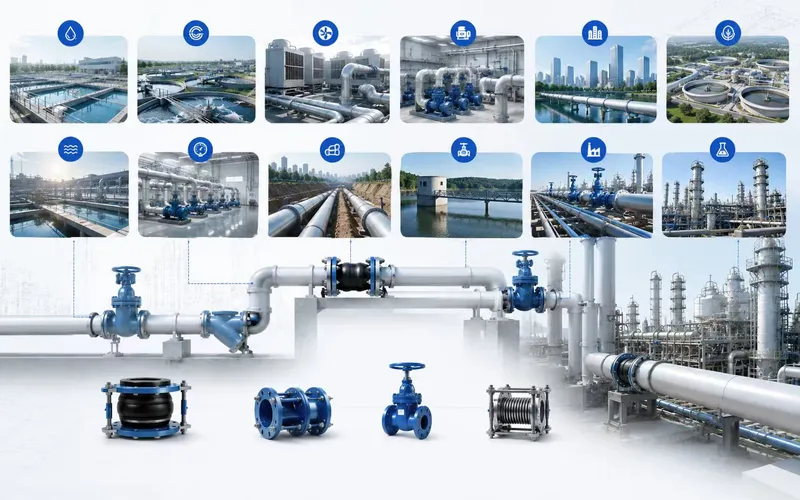
Rubber expansion joints, dismantling joints, pipe expansion joints, flange adaptors, steel flexible couplings and pipeline compensators have different structures, connections, movement capabilities and load characteristics. Incomplete information can result in repeated clarification or a preliminary quotation based on assumptions.
This guide helps importers, distributors, contractors, EPC companies and project buyers prepare a clear RFQ for pipeline product suppliers in China.
1. Why a Complete RFQ Matters
Industrial pipeline products are not normally selected by name alone. Products with similar descriptions may have different dimensions, materials, connection standards, installation lengths and operating limits.
A complete RFQ helps both parties:
- Identify the correct product type;
- Reduce misunderstandings caused by terminology;
- Determine whether customization is required;
- Compare quotations on a similar basis;
- Clarify what is included and excluded;
- Reduce repeated technical questions;
- Lower the risk of flange, dimension, material or packaging errors;
- Create a clear basis for drawings, contracts and production.
When some information is not yet available, it can be marked as pending confirmation rather than replaced by an assumption.
2. Identify the Required Product
Start the RFQ with an accurate product name. When the name is unknown, attach site photographs, an existing nameplate, an installation drawing or a simple sketch.
Typical Product Names
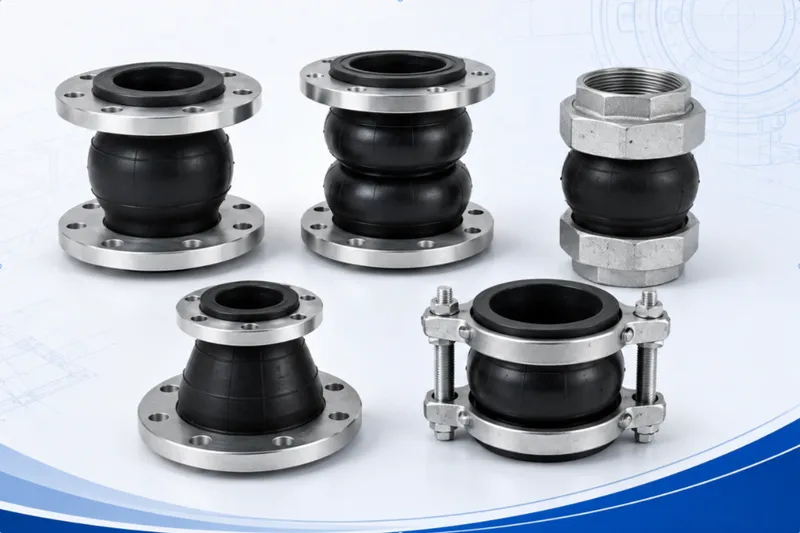
- Single sphere flanged rubber expansion joint;
- Double sphere rubber expansion joint;
- Threaded rubber expansion joint;
- Grooved rubber flexible coupling;
- Single-flange force-transmission joint;
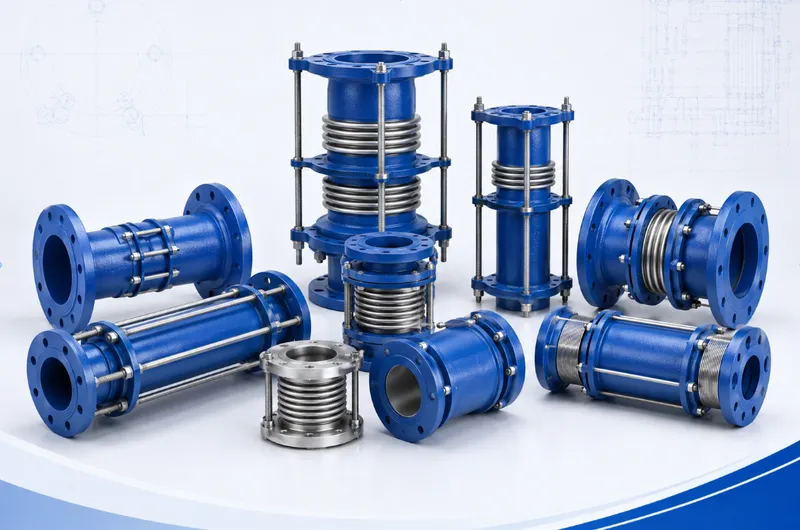
- Double-flange dismantling joint;
- Single-flange limit expansion joint;
- Double-flange limit expansion joint;
- Flanged loose-sleeve expansion joint;
- Gland-type loose-sleeve expansion joint;
- Sleeve expansion joint;
- Flange adaptor;
- Steel flexible pipe coupling;
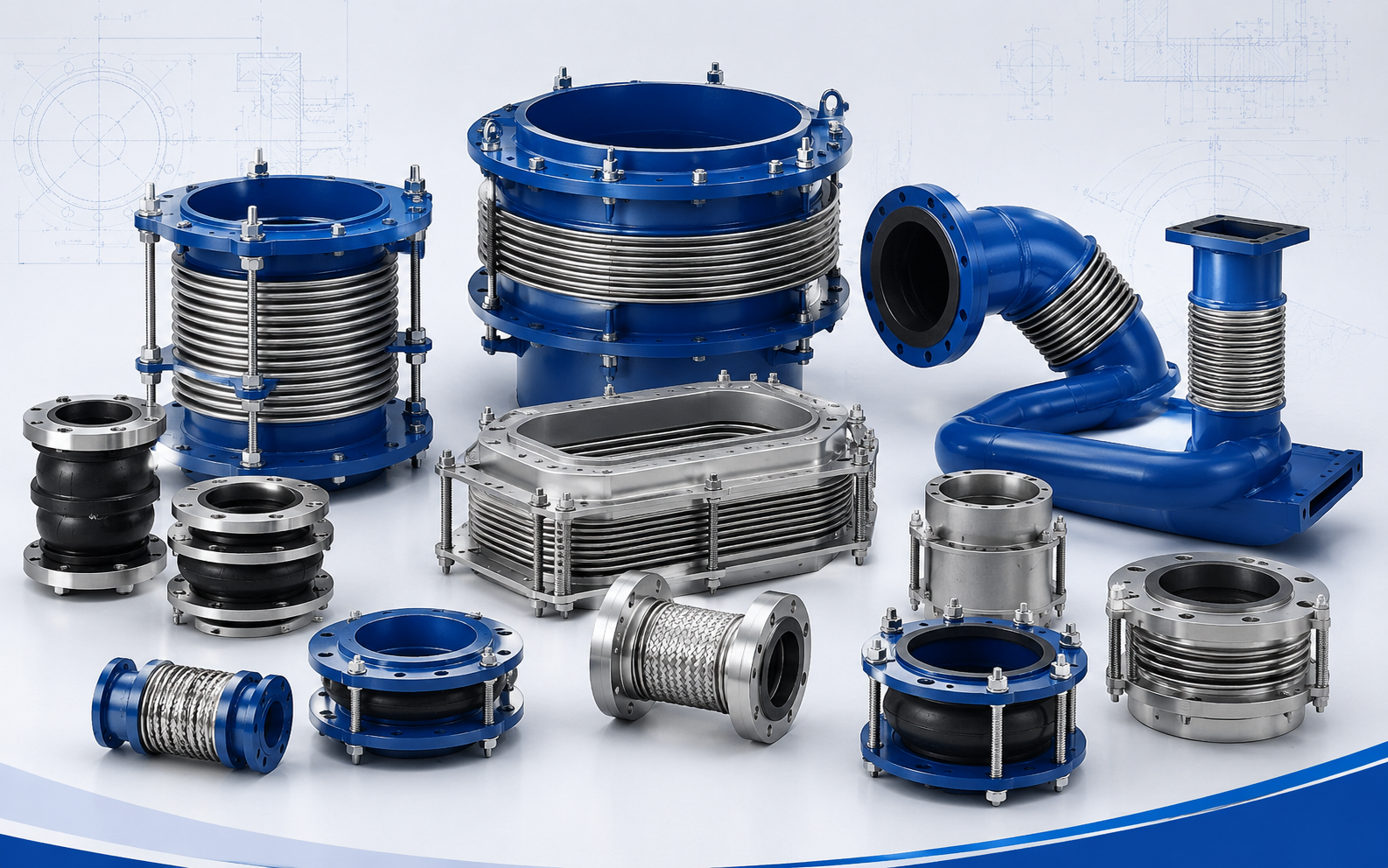
- Metallic bellows expansion joint;
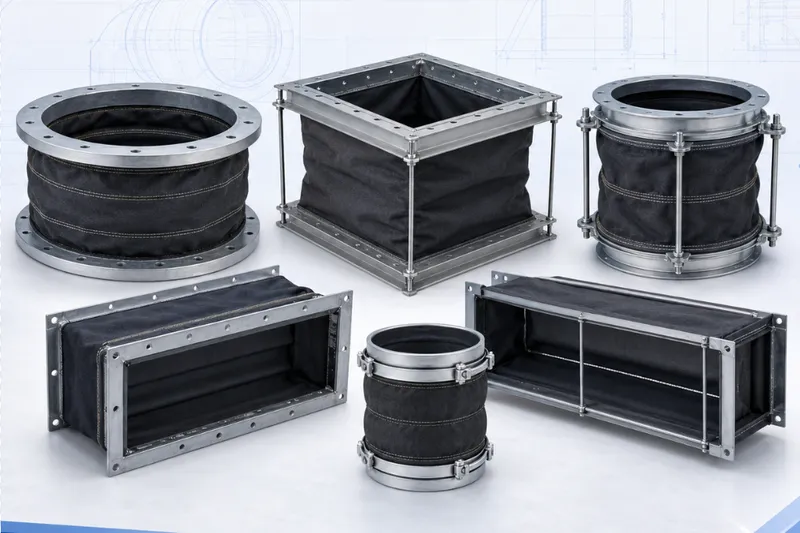
- Non-metallic expansion joint;
- Rigid or flexible waterproof wall sleeve.
Avoid using only broad descriptions such as “pipe joint,” “expansion joint” or “flexible connector.” These descriptions can refer to several different constructions.
3. Explain the Application and Installation Position
The same product may require different consideration when installed at different points in a piping system.
Typical application descriptions include:
- Installed on a pump suction line;
- Installed on a pump discharge line;
- Required for valve dismantling;
- Connecting a plain-ended pipe to a flanged valve;
- Connecting two plain-ended pipes;
- Used in a long-distance water pipeline;
- Used in wastewater-treatment equipment;
- Used in an industrial circulating-water system;
- Used in an air or flue-gas duct;
- Required for an existing pipeline rehabilitation project.
For rehabilitation projects, include photographs, existing connection dimensions, installed length and available working space.
4. Provide Accurate Dimensions
Nominal diameter is essential, but DN or NPS alone may not define the final product dimensions.
Recommended Dimensional Information
- Nominal diameter in DN or NPS;
- Actual pipe outside diameter;
- Required installation length;
- Face-to-face distance at site;
- Flange outside diameter and bolt-circle diameter;
- Number and diameter of bolt holes;
- Pipe wall thickness or pipe class;
- Available installation space;
- Length and width for non-circular ducts;
- Wall thickness for waterproof sleeves.
5. State the Medium, Temperature and Pressure
Operating conditions affect elastomer selection, metallic materials, sealing construction, coating and product design.
Medium
- Clean water, potable water, wastewater or circulating water;
- Seawater or saline medium;
- Oil or oil-containing fluid;
- Acid, alkaline solution or another chemical medium;
- Air, flue gas or another gas;
- Presence of solid particles;
- Main constituents and concentration;
- Process or safety data where the medium is uncertain.
Temperature
- Normal operating temperature;
- Maximum and minimum temperature;
- Ambient temperature;
- Whether temperature changes cyclically.
Pressure
- Normal operating pressure;
- Design pressure;
- Testing requirements;
- Possible transient pressure;
- Possible vacuum or negative pressure;
- Any project-specific pressure requirement.
Do not provide only a flange designation such as PN16 without explaining the actual medium and operating pressure.
6. Specify the Connection and Standard
Incompatible connection standards are a common risk in international pipeline product sourcing.
Common Connection Types
- Flanged;
- Threaded;
- Grooved or clamp-type;
- Welded;
- Gland connection for a plain-ended pipe;
- Flanged at one end and welded at the other;
- Flanged at one end and connected to a plain-ended pipe at the other.
Flange Information
Provide at least one of the following:
- The flange standard and rating;
- A mating-flange drawing;
- Outside diameter, bolt circle, hole quantity, hole diameter and sealing-face dimensions;
- Photographs and measurements of the existing equipment flange.
DN or NPS alone does not confirm that two flanges can be connected directly.
7. Define Movement Requirements
When requesting rubber joints, sleeve expansion joints, metallic bellows or non-metallic compensators, define the movement that the product must accommodate.
Movement Directions
- Axial compression;
- Axial extension;
- Lateral movement;
- Angular movement;
- Combined movement.
Also State
- The required movement amount;
- Whether it is installation adjustment or operating movement;
- The cause of the movement;
- Anchor and guide locations;
- Whether axial thrust is present;
- Whether control rods or anti-pullout devices are required;
- Whether a piping stress analysis is available.
Maximum movement values in different directions should not automatically be added together. Complex combined movement requires technical review.
8. Define Materials and Coating
Distinguish between the elastomer, body, flange, fastener, sealing and surface-protection requirements.
Possible Material Requirements
- Rubber body or liner;
- Steel body;
- Flange material;
- Bellows material;
- Sealing-ring material;
- Bolt, nut and tie-rod materials;
- Flexible layers of a fabric expansion joint.
Possible Surface Requirements
- Paint or epoxy coating;
- Project-specific colour;
- Outdoor or marine corrosion protection;
- Protection for underground service;
- Galvanized or specially treated fasteners;
- Coating-thickness and inspection requirements.
When the material is not specified, provide the medium, environment and project requirements so that a preliminary proposal can be reviewed.
9. List Quantities and Supply Scope
Show the quantity for each product and size separately. Use a table or attachment when the RFQ contains several product families.
| Item | Recommended Information |
|---|---|
| Product | Accurate name or drawing number |
| Size | DN/NPS, outside diameter and installation length |
| Quantity | Quantity for each size |
| Spares | Gaskets, fasteners or other spare parts |
| Accessories | Control rods, flanges, bolts or other components |
10. State Documentation and Inspection Requirements
Documentation requirements should be stated during the RFQ stage, rather than added after production.
Possible Documentation
- Product drawings;
- Technical datasheets;
- Material documentation;
- Inspection or test records;
- Dimensional reports;
- Coating inspection records;
- Packing list and commercial invoice;
- Origin documentation;
- Project-specific compliance documents;
- Installation or maintenance instructions.
Possible Inspection Requirements
- Supplier internal inspection;
- Buyer or buyer-representative inspection;
- Third-party inspection;
- Drawing approval before production;
- Production hold or witness points;
- Pre-shipment photographs or video;
- Specified testing and acceptance criteria.
The availability of each document should be confirmed according to the product, order and written agreement.
11. Define Packaging and Marking
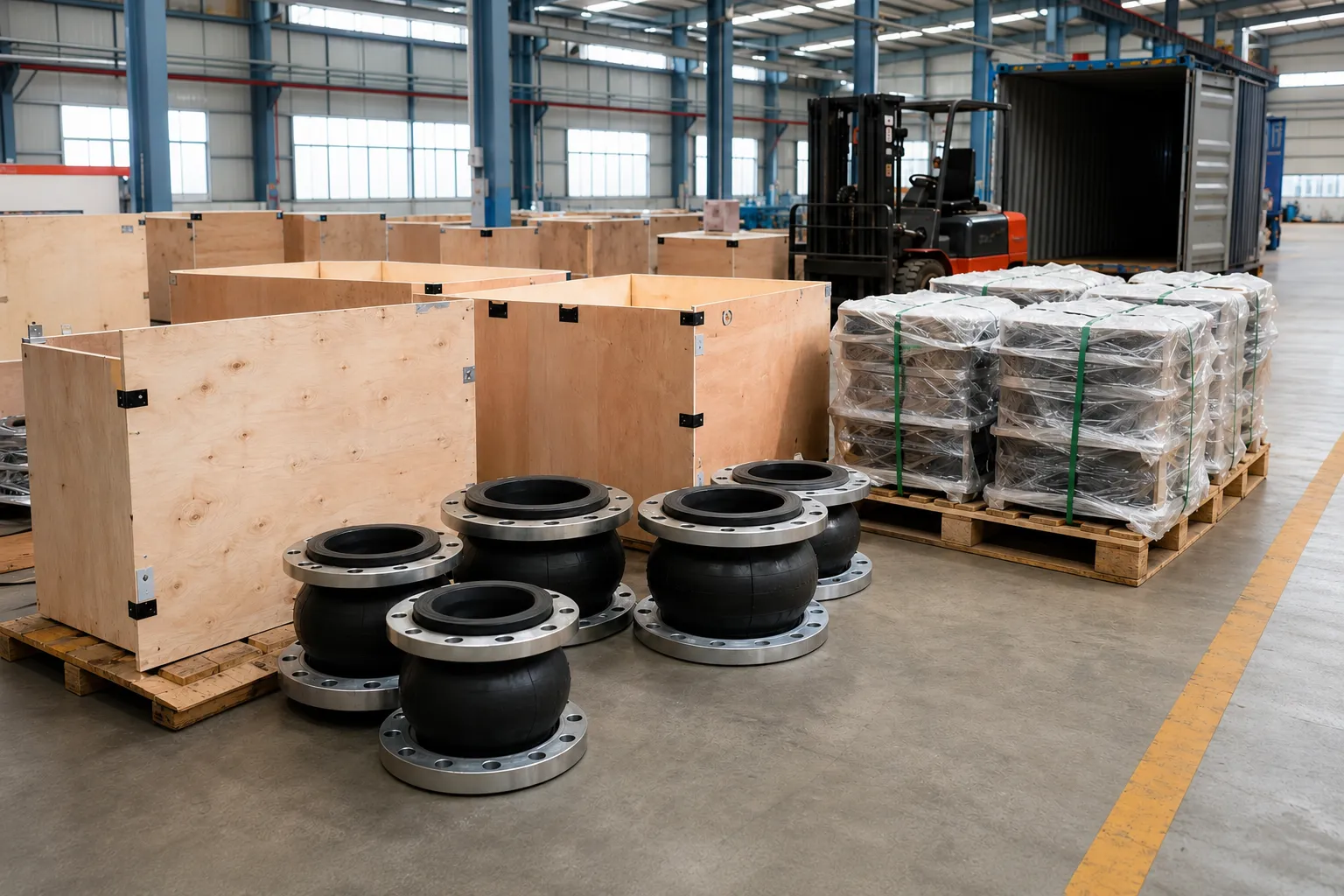
Pipeline products can be heavy and may include elastomeric bodies, bellows, coatings or machined sealing surfaces that require protection.
Packaging Requirements
- Wooden case, pallet or another packing method;
- Whether stacking is permitted;
- Moisture, corrosion and end protection;
- Export packing requirements;
- Individual or bulk packing;
- Package size or weight limits;
- Forklift and lifting requirements.
Marking Requirements
- Product name and size;
- Project number;
- Purchase order number;
- Case number;
- Buyer identification;
- Destination or warehouse code;
- Other project labels.
12. State the Incoterm, Destination and Currency
Do not provide only an Incoterm abbreviation. Include the named port, place or destination.
Examples
- EXW with the named factory or delivery location;
- FOB with the named Chinese port of shipment;
- CFR with the named destination port;
- CIF with the named destination port;
- DAP with the named delivery place or address.
Also state:
- Destination country and city;
- Destination port;
- Sea, air or courier preference;
- Quotation currency;
- Whether partial shipment is permitted;
- Required delivery date;
- Required quotation validity.
Import duty, local tax, import permits and destination clearance should be confirmed according to the agreed trade term and contract.
13. Recommended RFQ Attachments
- Product datasheet;
- Piping layout;
- Equipment connection drawing;
- Flange drawing;
- Site photographs;
- Existing product nameplate;
- Dimensional sketch;
- Project specification;
- Material requirements;
- Inspection plan;
- Packing and marking specification.
Drawings should show the unit, revision and date. Documents not yet approved should be marked as inquiry or reference versions.
14. RFQ Template
Subject: RFQ for Pipeline Connection and Expansion Products
Dear Supplier,
Please provide your technical and commercial quotation based on the following information.
1. Product Information
- Product name:
- Drawing or item number:
- Nominal size:
- Actual pipe outside diameter:
- Installation length:
- Quantity:
2. Operating Conditions
- Installation position:
- Operating medium:
- Operating temperature:
- Operating pressure:
- Design pressure:
- Vacuum or transient pressure:
3. Connection and Movement
- Connection type:
- Flange or thread standard:
- Axial movement:
- Lateral movement:
- Angular movement:
- Restraint or anti-pullout requirement:
4. Materials and Surface Protection
- Body material:
- Elastomer or sealing material:
- Flange material:
- Coating requirement:
5. Commercial Requirements
- Incoterm and named place:
- Destination port or delivery address:
- Quotation currency:
- Required delivery date:
- Packaging requirements:
- Documentation and inspection requirements:
Please state the supply scope, unit price, total price, delivery time, packing, quotation validity, payment terms and any information requiring further confirmation.
Best regards.
15. What to Check in the Supplier’s Quotation
- Whether the offered construction matches the RFQ;
- Whether dimensions and connections are correct;
- Whether materials are clearly stated;
- Whether flanges, bolts, control rods and accessories are included;
- Whether packing is included in the price;
- Whether the Incoterm and named place are correct;
- Who pays freight, insurance and destination charges;
- Whether documentation and inspection are included;
- Whether the quotation contains technical assumptions;
- When the delivery period starts;
- Whether drawing approval affects the delivery period;
- Quotation validity and payment terms.
For customized products, obtain an approved drawing or technical datasheet before placing the order.
16. Common RFQ Mistakes
- Providing only the product name and quantity;
- Providing nominal size without actual pipe outside diameter;
- Omitting medium, temperature or pressure;
- Omitting the flange standard;
- Confusing installation adjustment with operating movement;
- Not stating restraint or anti-pullout requirements;
- Sending photographs without dimensions;
- Sending drawings without units, dates or revisions;
- Omitting inspection and documentation requirements;
- Writing FOB or CIF without a named port;
- Not stating whether packing and freight should be included;
- Adding material or certification requirements after production.
17. Send Your RFQ to CNPIPEPARTS
Send us your product list, site photographs, drawings, operating conditions, dimensions, flange standard and destination information.
We can assist with identifying rubber expansion joints, dismantling joints, pipe expansion joints, flange adaptors, steel flexible couplings, metallic bellows, non-metallic compensators and related pipeline products.
When information is not yet available, mark it as pending confirmation. We will identify the points requiring clarification rather than presenting unsupported assumptions as final parameters.
Final construction, materials, dimensions, documentation and commercial terms must be based on mutually confirmed drawings, datasheets, quotations or contract documents.