
Dimensional Inspection
Dimensional inspection
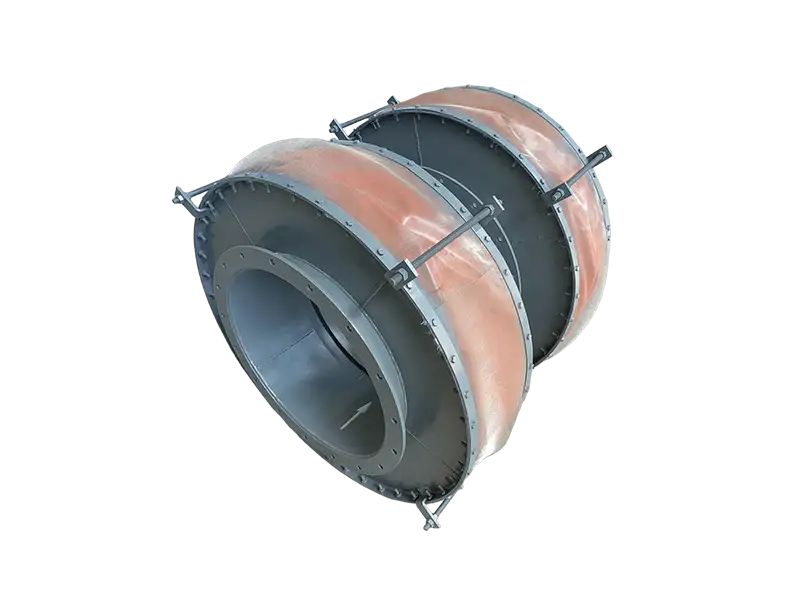
A lined non-metallic expansion joint is a flexible connection and movement compensation component designed for flue-gas, ventilation, dust-collection, desulfurization and selected corrosive process-gas systems.
The non-metallic flexible section accommodates axial, lateral and angular movement caused by thermal expansion, equipment vibration and installation misalignment. It can also help reduce mechanical loads and vibration transferred to connected ductwork and equipment.
An internal flow liner, metal sleeve or corrosion-resistant lining can be incorporated according to gas velocity, temperature, dust concentration, abrasion and corrosion conditions. The lining helps protect the flexible material from direct gas flow, particles and aggressive media.
A lined non-metallic expansion joint generally consists of a metal frame, flexible fabric belt, sealing layer, reinforcement layer, insulation layer, clamping plates or fastening hardware, and an internal flow liner or lining.
The metal frame connects the expansion joint to the duct or equipment. The flexible section accommodates movement, the sealing layer limits gas leakage, the reinforcement layer improves dimensional stability, and the insulation layer reduces the temperature reaching the outer flexible materials.
The internal flow liner or lining can reduce direct impingement from high-velocity gas, dust and abrasive particles. Liner material, thickness, length and orientation should be selected according to flow direction, temperature, velocity and abrasion.
Flexible sections can be manufactured from glass-fibre fabrics, silicone-coated fabrics, fluoroelastomer-coated fabrics, PTFE composites, high-temperature textiles and other engineered flexible materials.
Internal liners or flow sleeves can be manufactured from carbon steel, stainless steel, corrosion-resistant alloys, fluoropolymer materials or other project-specified materials.
Final material selection should be based on medium composition, temperature, pressure, gas velocity, moisture, dust concentration, corrosion, abrasion and required service life.
Lined non-metallic expansion joints can be designed to accommodate axial compression, axial extension, lateral movement and angular deflection. Selected fabric constructions can also accommodate combined movements.
Actual allowable movement depends on joint size, flexible-layer arrangement, installed length, operating temperature and required cycle life. The expansion joint should not support ductwork or equipment weight, and it is not a substitute for anchors, guides or load-bearing supports.
Please provide the following information so that the flexible section, lining and metal-frame arrangement can be properly evaluated:
We can design and manufacture lined non-metallic expansion joints according to operating conditions, duct dimensions, site sketches and project drawings. Final materials, dimensions, movement capacity, temperature range and inspection requirements are subject to the approved technical specification and manufacturing drawing.
Reference dimensions only. Custom sizes and flange standards are available on request.
Quality control and inspection items are determined by product structure, order requirements and the order quality plan.
Dimensional inspection

Pressure testing

Plywood case export packing
Get professional solutions and competitive quotes from our engineering team.
Customize your cookie preferences. Necessary cookies are always active.