简体中文
简体中文  English
  日本語
日本語  한국어
한국어  Français
  Deutsch
  Español
  Português
  Русский
  العربية
  ไทย
ไทย  Tiếng Việt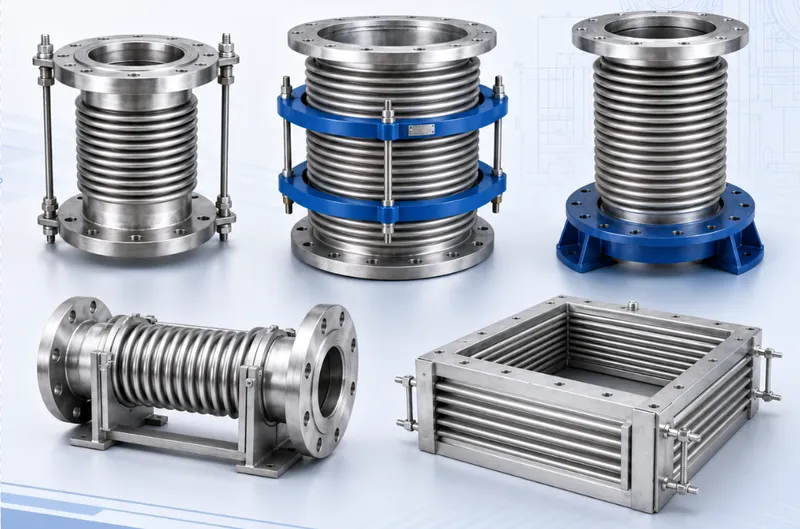

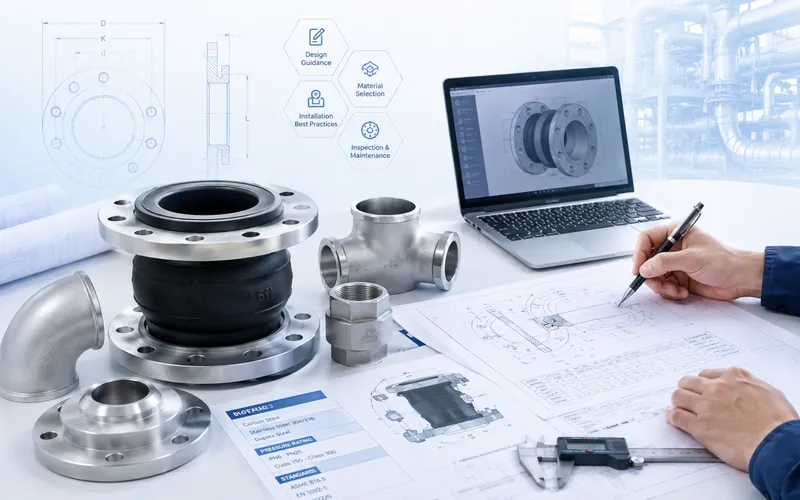
What Is a Rubber Expansion Joint? Structure, Types, Selection and Installation
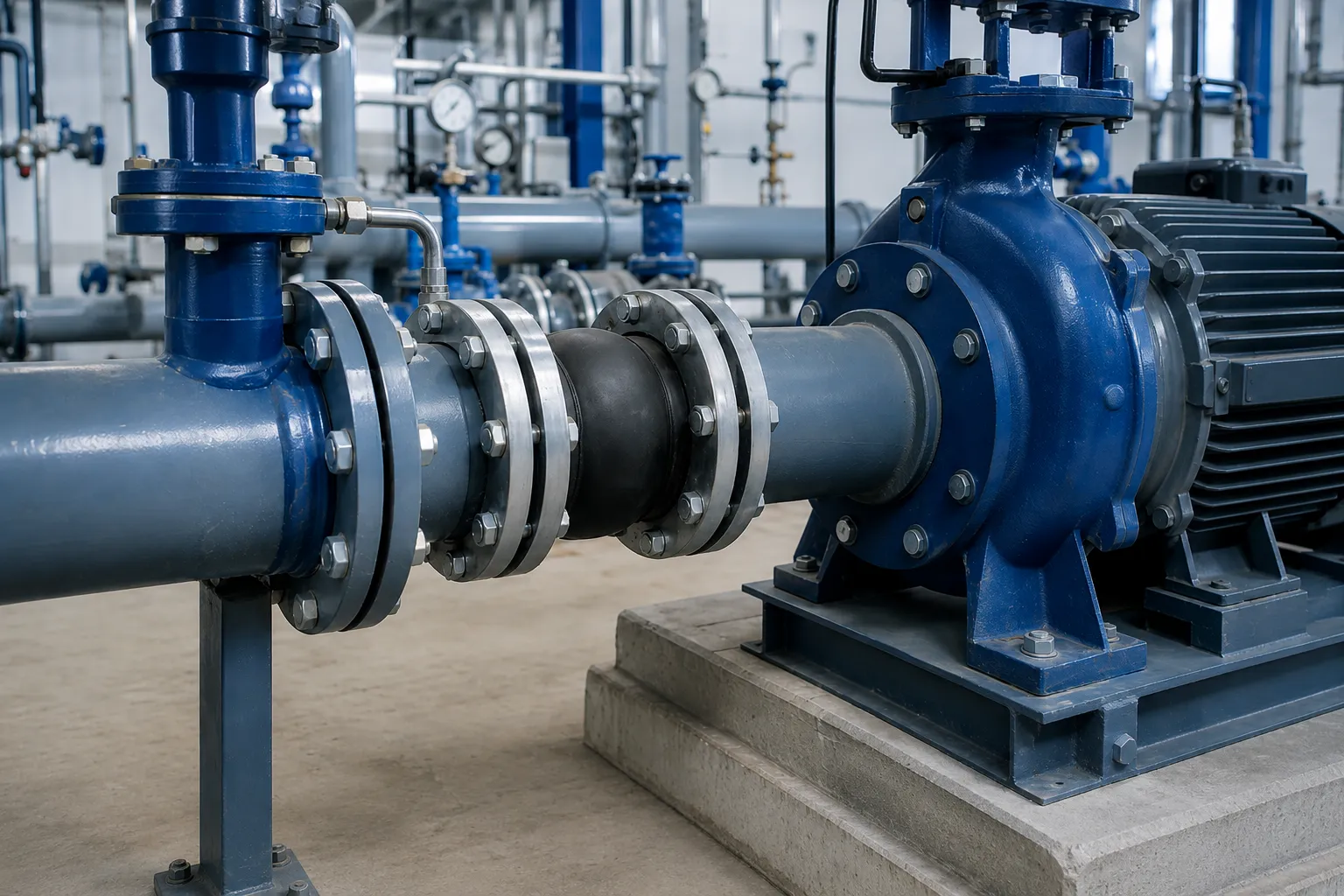
A rubber expansion joint is a flexible connector installed between pipes, pumps, valves and equipment interfaces. It uses the elastic deformation of an elastomeric body to accommodate limited axial, lateral and angular movement while helping reduce the transmission of mechanical vibration and structure-borne noise.
Depending on the market and project documentation, the same general product family may also be described as a rubber flexible joint, elastomeric expansion joint, rubber compensator or flexible rubber connector. These names do not guarantee identical construction or performance, so the actual product design and operating conditions must always be confirmed.
1. Basic Construction of a Rubber Expansion Joint
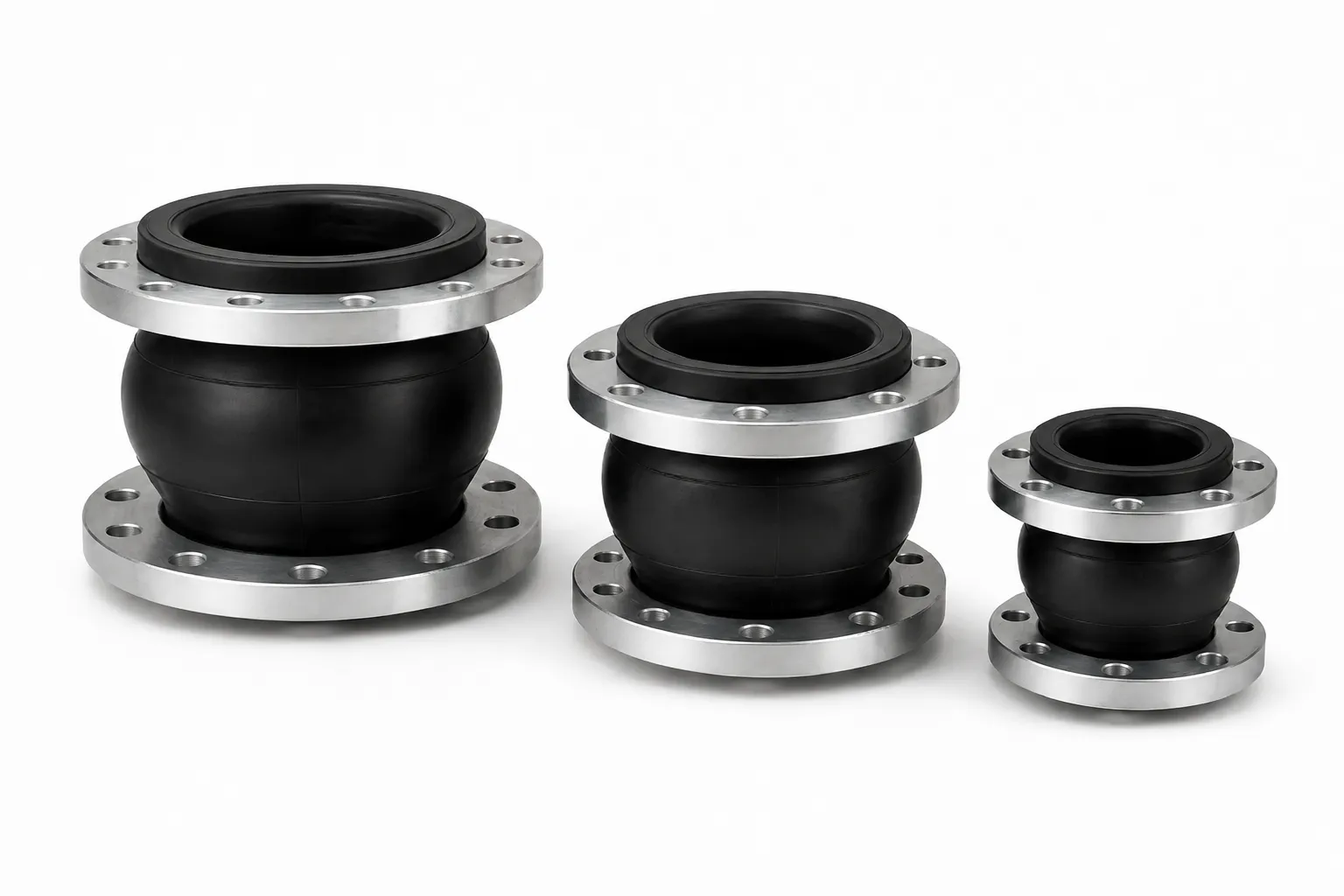
A typical rubber expansion joint consists of an elastomeric body, reinforcing layers, end connections and, where required, control units. The rubber body is the main component that provides flexibility.
Inner Rubber Layer
The inner layer is in direct contact with the operating medium. Its material must be compatible with water, wastewater, oil, chemicals or other industrial fluids being conveyed.
Reinforcing Layers
Reinforcing layers improve structural stability and pressure capability. Their materials and construction vary according to the joint design.
Outer Cover
The outer cover protects the reinforcement and helps the product withstand the surrounding installation environment.
Sphere or Arch
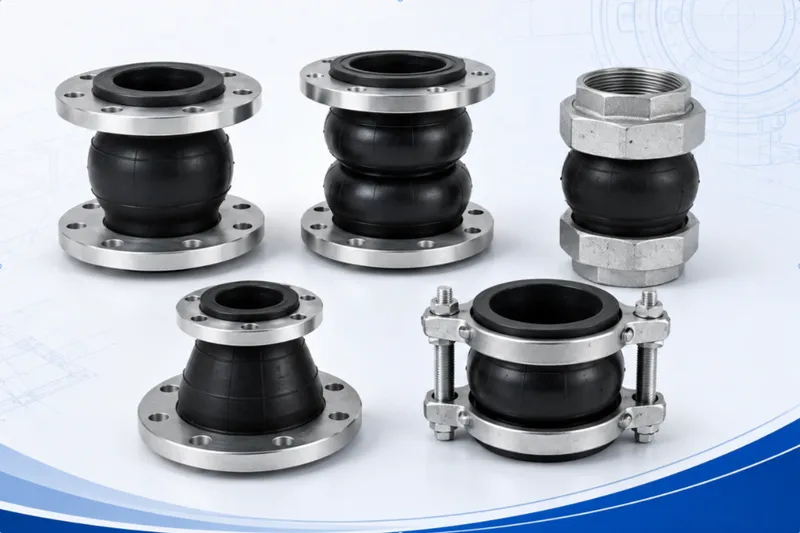
The raised rubber sphere is the most recognizable feature. A single sphere joint has one arch, while a double sphere joint has two connected arches. The arch provides space for controlled deformation.
End Connections
Common connection arrangements include flanges, threaded ends and grooved or clamp-type connections.
Control Units
Control rods or other restraint components may be required where pressure thrust, insufficient anchoring, abnormal movement or pullout risk must be controlled.
2. How Does a Rubber Expansion Joint Work?
Rigid piping may develop additional stress due to vibration, temperature change, foundation movement or installation tolerance. A rubber expansion joint provides a flexible transition through controlled deformation of its elastomeric body.
The body can compress or extend when the connection points move along the pipe axis. It can deform laterally when the two centerlines remain approximately parallel but shift sideways, and it can provide limited angular movement when the end faces rotate.
Movement capabilities in different directions are not unlimited or automatically additive. Combined axial, lateral and angular movement requires confirmation against product data.
3. Main Functions
Mechanical Vibration Isolation
Pumps, motors, compressors and other rotating equipment can generate vibration. A correctly selected and installed rubber joint can reduce part of the vibration transmitted to piping, supports and surrounding structures.
It cannot correct poor pump alignment, inadequate foundations or unsupported piping.
Reduction of Structure-Borne Noise
The elastomeric body can reduce part of the noise transmitted through rigid metallic connections, which is useful in pump rooms, treatment plants and HVAC equipment rooms.
Limited Axial Movement
The joint can compress or extend within its permitted range to accommodate limited operating movement or installation tolerance. Installation adjustment must not be treated as unrestricted continuous movement.
Lateral and Angular Movement
A rubber joint may accommodate limited lateral displacement and angular deflection. It should not be used to force severely misaligned piping into position.
Reduction of Equipment-Nozzle Loads
A properly arranged flexible connection may reduce part of the movement and vibration transmitted to pumps, valves and equipment nozzles. The connected equipment and piping still require independent support.
4. Common Types of Rubber Expansion Joints
Single Sphere Flanged Rubber Expansion Joint
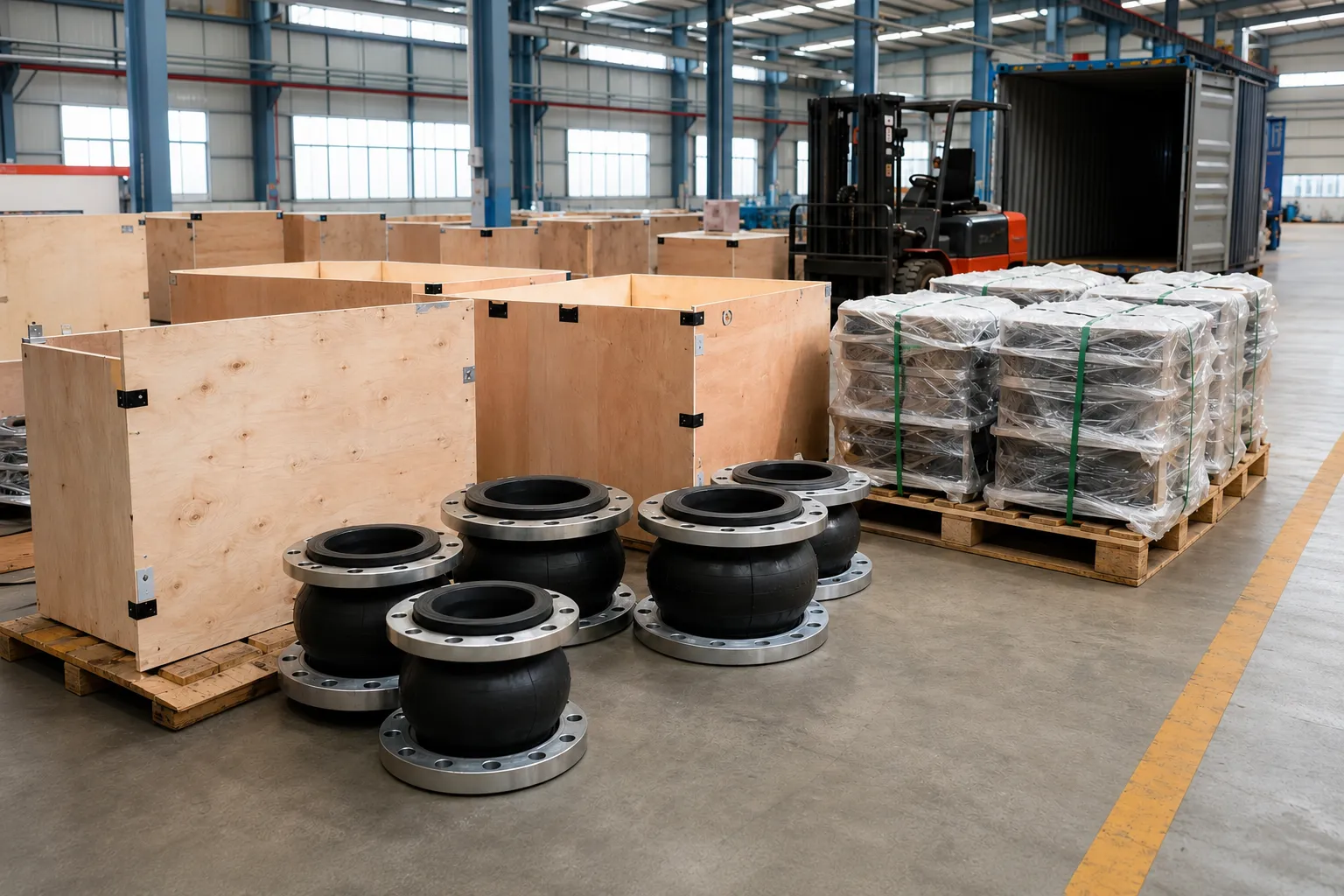
A single sphere joint has one raised rubber arch and a compact construction. It is commonly considered for pump connections, water pipelines, treatment equipment and general industrial water systems.
Double Sphere Flanged Rubber Expansion Joint
A double sphere joint contains two connected arches. Its installation length and flexibility characteristics differ from a single sphere joint. It is not automatically the better option for every application.
Threaded Rubber Expansion Joint
Threaded joints are used mainly in smaller equipment connections, auxiliary pipelines and HVAC water systems. The thread standard, male or female arrangement and metallic end material must be confirmed.
Grooved Rubber Flexible Coupling
Grooved rubber connectors use compatible groove or clamp-type connections and can simplify installation and removal in grooved piping systems.
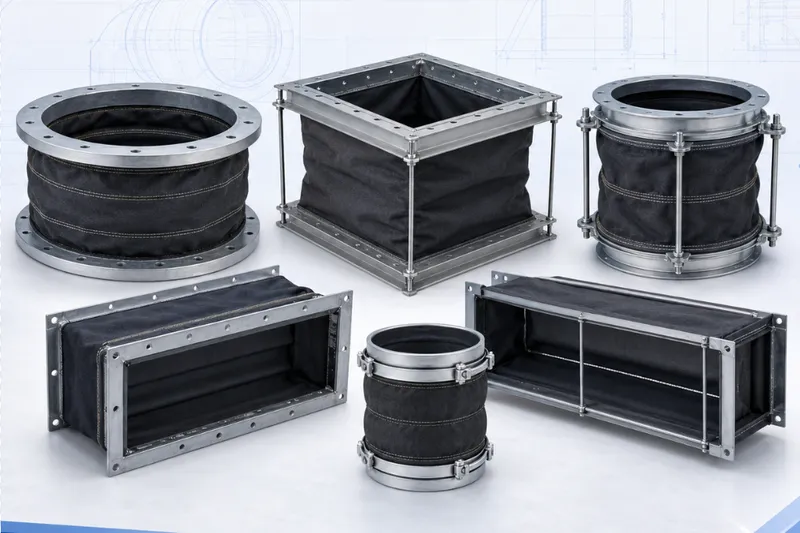
Rubber Duct Expansion Joint
Rubber duct compensators are intended mainly for air, gas or low-pressure ducting. They may be manufactured in round, rectangular or other customized shapes.
A rubber duct compensator is not the same as a pressure-rated rubber joint for liquid piping and should not be selected as a direct substitute.
5. Movement Directions
Axial Compression
Axial compression occurs when the two connection points move toward each other along the pipe centerline.
Axial Extension
Axial extension occurs when the connection points move apart. Extension requires particular attention to pressure thrust and pullout control.
Lateral Movement
Lateral movement occurs when the two pipe centerlines remain approximately parallel but shift sideways.
Angular Movement
Angular movement occurs when the two connection faces rotate and form a limited angle.
6. Elastomer Selection
EPDM-Type Elastomer
EPDM-type materials are often considered as an initial option for clean water, water treatment, selected HVAC systems and general industrial water service. Actual compatibility and project requirements must be confirmed.
NBR-Type Elastomer
NBR-type materials may be considered for selected oil-containing media. Oil type, concentration, temperature and compatibility must be reviewed.
CR-Type Elastomer
CR-type materials may be considered where selected weathering or medium-resistance characteristics are required.
Customized Elastomers
Special chemicals, mixed fluids or project-specific conditions may require another elastomer formulation. Complete process-medium information should be provided.
Elastomer names provide an initial selection direction only and do not replace a compatibility review.
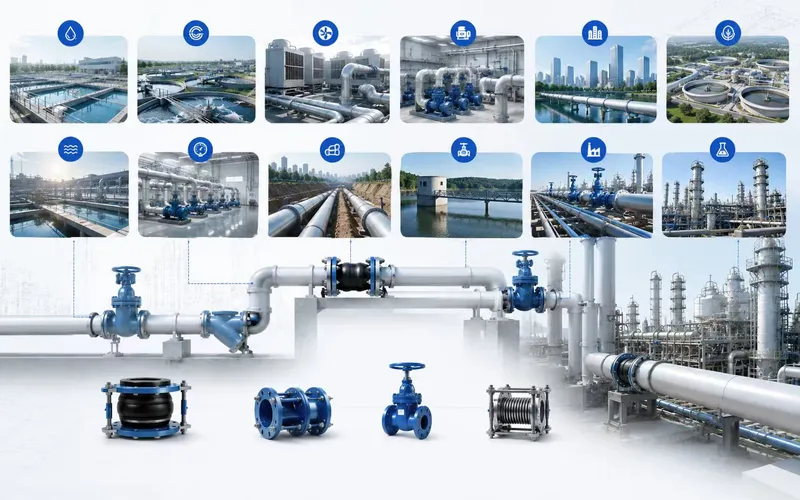
7. Typical Applications
Water Supply and Pump Stations
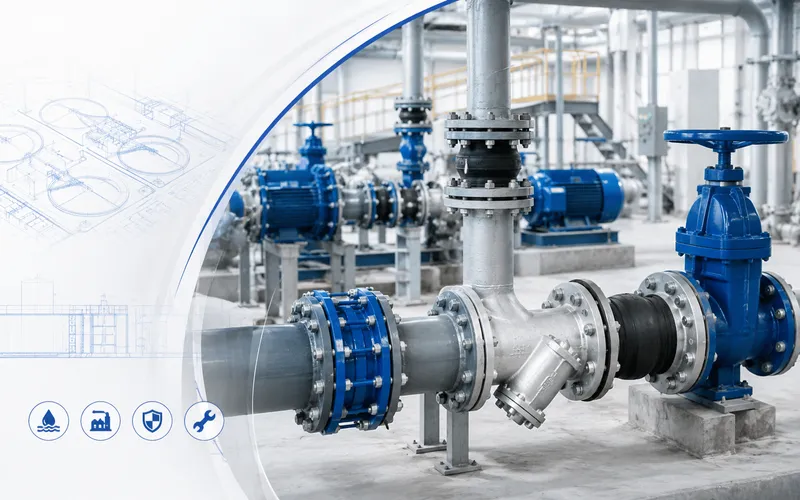
Rubber joints may be installed near pumps, valves, check valves and transmission pipelines to provide flexible connections and vibration isolation.
Wastewater Treatment
Wastewater systems require confirmation of the actual medium, inner rubber compatibility and corrosion protection of metallic components.
HVAC Water Systems
Rubber joints may be used in chilled-water, cooling-water and equipment-room pump connections together with proper supports and vibration-control systems.
Industrial Circulating Water
Continuous operation, temperature, pressure, water chemistry and maintenance requirements must be considered.
Water-Treatment Equipment
Flexible connectors may be used at filters, heat exchangers, circulation pumps and other equipment interfaces.
General Industrial Piping
Use in chemical, power, paper, food-processing or other industrial applications depends on medium compatibility, pressure, temperature and project compliance requirements.
8. Comparison with Other Pipeline Products
Rubber Expansion Joint vs Dismantling Joint
A rubber joint focuses on flexibility, vibration isolation and limited movement. A dismantling joint focuses on installation adjustment, equipment removal and axial force transmission.
Rubber Expansion Joint vs Limit Expansion Joint
A limit expansion joint normally uses steel sleeves, seals, glands and limit rods for controlled axial adjustment. A rubber joint provides multi-directional flexibility through elastomeric deformation.
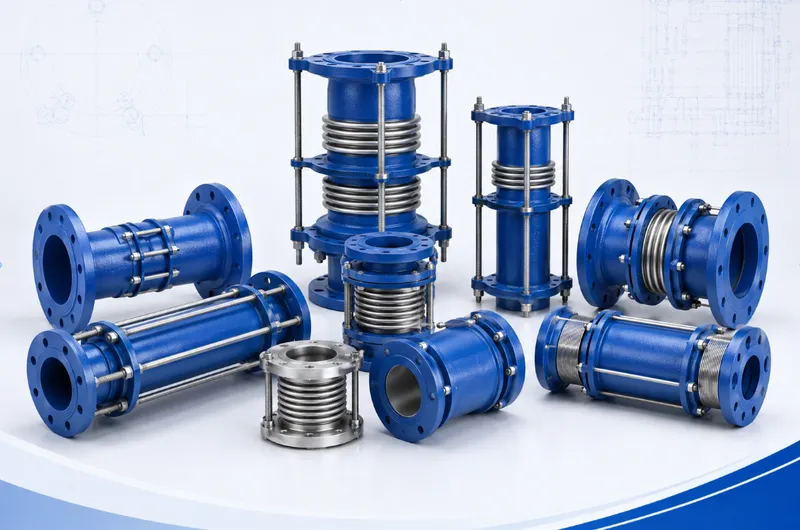
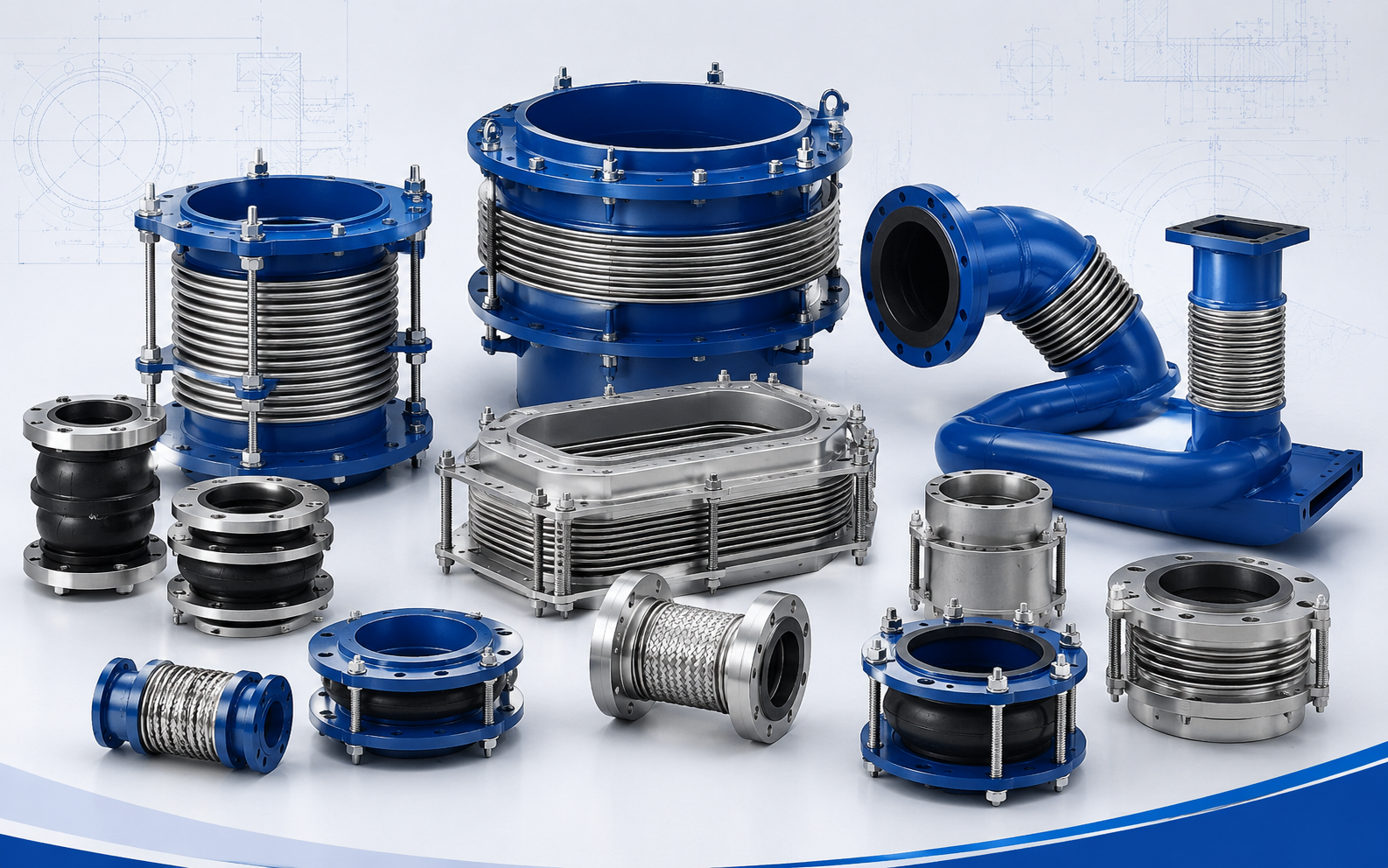
Rubber Expansion Joint vs Metallic Bellows Joint
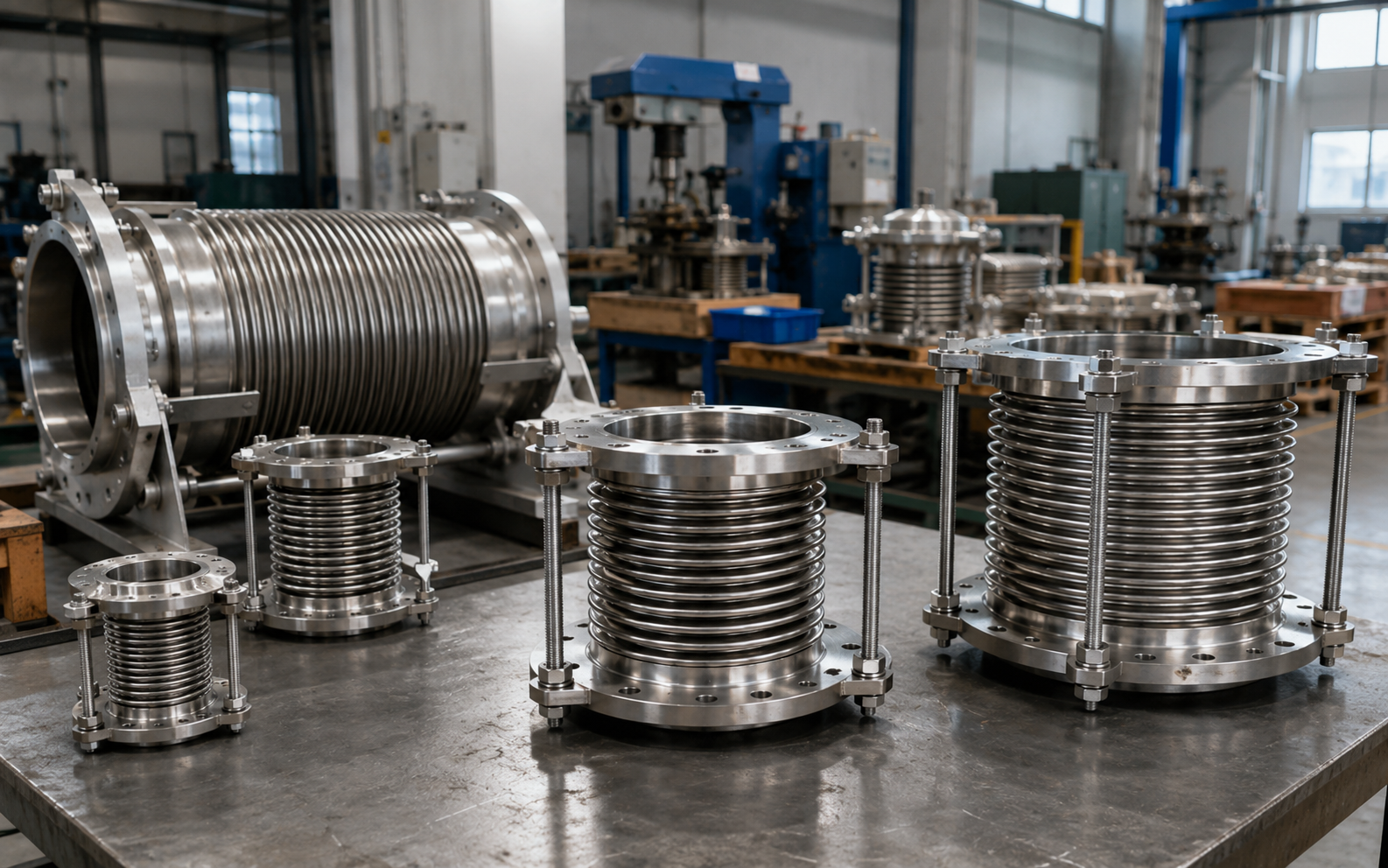
Rubber joints are commonly considered for water service, pump connections and vibration isolation. Metallic bellows joints are often used for engineered thermal movement or higher-temperature conditions.
Rubber Expansion Joint vs Steel Flexible Coupling
A steel flexible coupling connects two plain-ended pipes and accommodates a specified outside-diameter range. A rubber joint provides flexibility through an elastomeric body.
Rubber Expansion Joint vs Flange Adaptor
A flange adaptor connects a plain-ended pipe to flanged equipment. Its primary purpose is connection conversion rather than vibration isolation.
9. Information Required for Correct Selection
- Operating medium, composition and concentration;
- Normal, maximum and minimum temperature;
- Operating pressure, design pressure and possible vacuum;
- Nominal size and required installation length;
- Connection type and flange standard;
- Axial, lateral and angular movement requirements;
- Pipe supports, anchors and guide locations;
- Need for control rods or restraint units;
- Outdoor, underground, chemical or marine environment;
- Inspection, documentation and compliance requirements.
10. When Are Control Units Required?
Internal pressure across an unrestrained rubber expansion joint can create axial thrust. A piping system with correctly designed anchors may carry that thrust, but control units may be required where anchoring is insufficient or the joint must be protected from excessive extension.
Control units should be evaluated where:
- Anchors cannot reliably resist pressure thrust;
- The joint is installed near a pump, valve or equipment nozzle;
- Significant startup, shutdown or transient conditions are expected;
- There is a risk of excessive extension or pullout;
- The project specification requires restraint;
- Equipment nozzles have limited allowable loads.
Control rods must be adjusted according to the product instructions. They should not be arbitrarily locked or left incorrectly positioned.
11. Installation Guidelines
- Inspect the joint: check the rubber body, flanges, sealing faces and control units.
- Align the piping: do not force the joint to correct severe misalignment.
- Provide independent supports: pipes, valves and equipment must not be supported by the joint.
- Control installed length: avoid excessive compression or extension.
- Tighten evenly: tighten flange bolts gradually in a cross pattern.
- Avoid twisting: prevent torsion during positioning and bolt tightening.
- Protect the rubber: avoid welding sparks, sharp tools, paint and incompatible chemicals.
- Adjust control units: follow the approved technical instructions.
- Inspect before operation: confirm connections, supports, restraint and movement clearance.
12. Common Selection and Installation Mistakes
- Selecting by nominal size without confirming the flange standard;
- Selecting an elastomer without checking medium compatibility;
- Treating installation adjustment as continuous operating movement;
- Using the joint to force severely misaligned piping into position;
- Allowing the joint to support pipes, valves or equipment;
- Ignoring axial thrust generated by internal pressure;
- Using the joint under vacuum without checking collapse resistance;
- Ignoring pullout risk where anchors are inadequate;
- Treating the joint as a stand-alone water-hammer device;
- Exposing the rubber body to welding sparks;
- Adding different movement requirements without technical review;
- Operating without routine inspection.
13. Inspection and Maintenance
Rubber expansion joints should be included in the regular piping inspection programme. Inspection frequency depends on the medium, temperature, pressure, operating cycles, environment and project maintenance requirements.
Recommended Inspection Items
- Cracks, abnormal bulging, separation or ageing of the rubber body;
- Leakage at the connection;
- Abnormal extension, compression, twisting or lateral displacement;
- Loose, deformed or corroded bolts and control units;
- Movement of supports, anchors or equipment foundations;
- Contact with surrounding structures or sharp objects;
- Changes in medium, temperature or pressure from the original selection basis.
Exposed reinforcement, continuing leakage, severe deformation or damaged components require prompt inspection and corrective action.
14. Information Required for a Quotation
- Application and installation position;
- Nominal diameter;
- Operating medium and concentration;
- Normal and maximum operating temperature;
- Operating pressure, design pressure and possible vacuum;
- Connection type and flange standard;
- Required installation length;
- Axial, lateral and angular movement;
- Pipe support, anchor and restraint conditions;
- Rubber and metallic material requirements;
- Coating, marking and packaging requirements;
- Project drawings, specifications or datasheets;
- Quantity and destination port.
15. Frequently Asked Questions
Are a rubber joint and a rubber expansion joint the same product?
The terms are often used for similar flexible rubber pipeline products. However, actual construction, connection type, dimensions and performance requirements must still be confirmed.
Can a rubber expansion joint absorb thermal movement?
It can accommodate limited movement within its approved range. Suitability for thermal movement depends on temperature, movement direction, anchors and the selected joint design.
Can a rubber expansion joint support pipe weight?
No. Pipes, valves and equipment require independent support.
Can it eliminate water hammer?
No. Water hammer requires hydraulic analysis, valve control, pressure-management equipment, air management and complete system design.
Are control rods always required?
Not always. Their need depends on pressure thrust, anchoring, installation position, allowable equipment loads and pullout risk.
Can rubber expansion joints be customized?
Nominal size, installation length, elastomer, flange standard, metallic materials, control units, coating, identification and packaging can be evaluated for customization.
16. Request Selection Support
For pump stations, water supply, wastewater treatment, HVAC or industrial piping projects, provide site photographs, equipment interfaces, piping drawings, medium, temperature, pressure, movement and flange requirements.
We can assist with evaluating single sphere, double sphere, threaded, grooved or other rubber flexible connection designs, together with elastomer, restraint and customization requirements.
Final technical parameters, materials, dimensions and suitability must be based on mutually confirmed drawings, datasheets, quotations or contract documents.