简体中文
简体中文  English
  日本語
日本語  한국어
한국어  Français
  Deutsch
  Español
  Português
  Русский
  العربية
  ไทย
ไทย  Tiếng Việt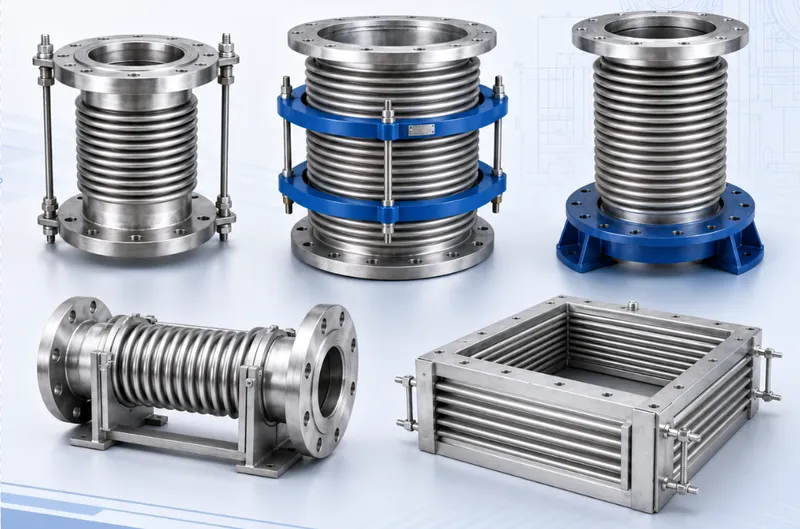

Single Sphere Rubber Expansion Joints for Pump Stations and Water Pipelines
Pump stations and water pipelines may be affected by pump vibration, equipment starting and stopping, installation tolerances, pipeline movement and changing pressure conditions. When pumps and pipelines are connected entirely by rigid components, vibration and mechanical loads may be transmitted through the piping system.
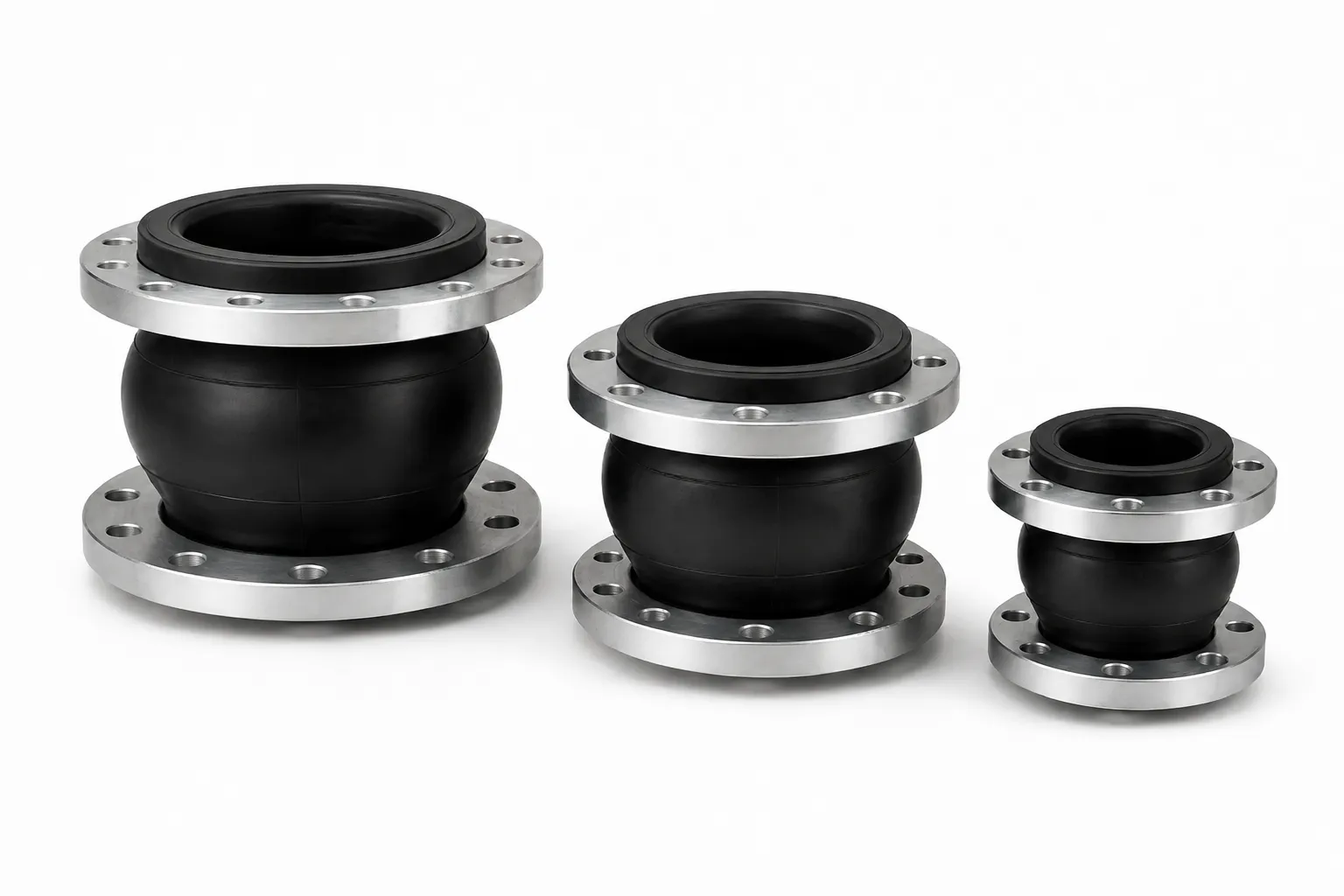
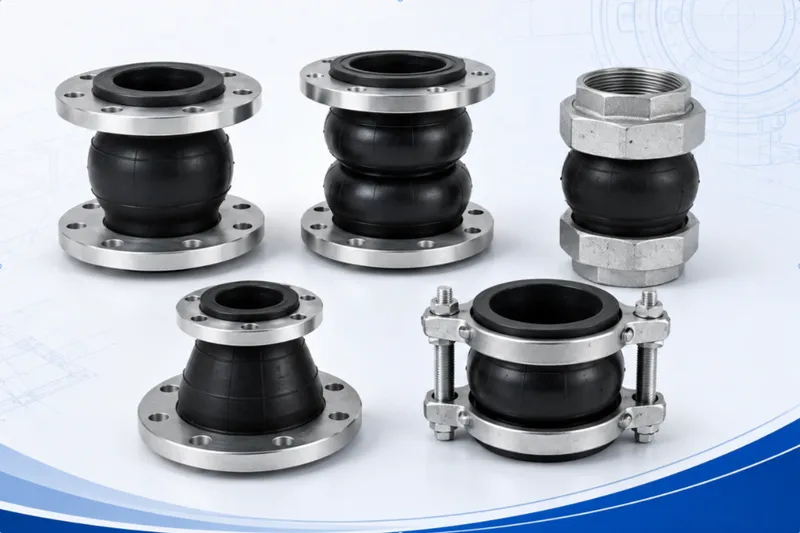
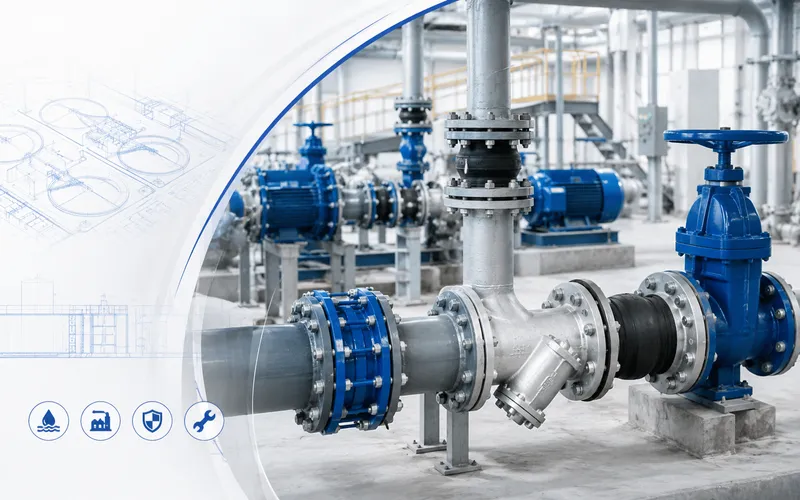
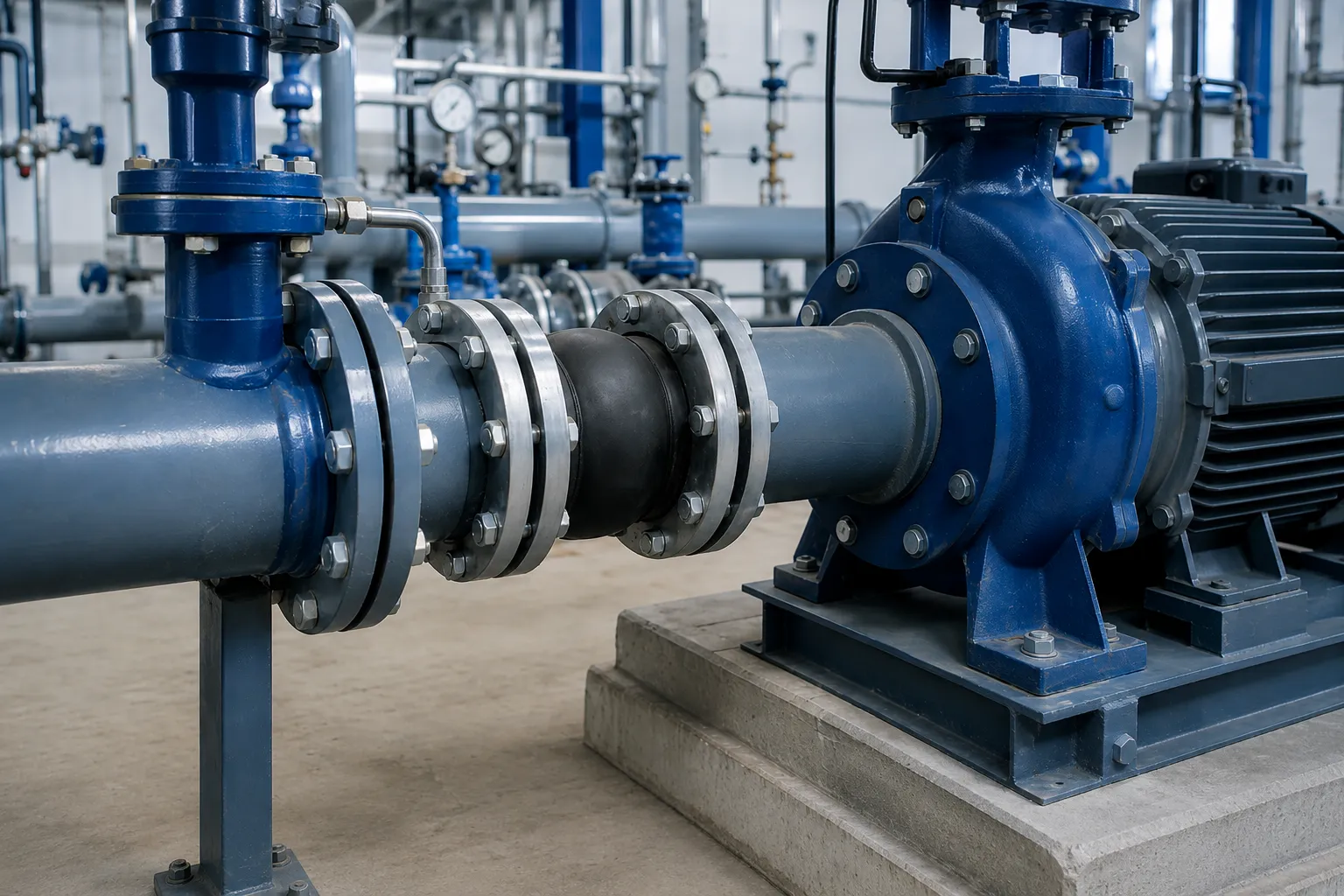
A single sphere rubber expansion joint is a flexible pipeline connector commonly installed near pumps, valves, water-treatment equipment and water pipelines. It can help isolate a portion of mechanical vibration and accommodate limited axial, lateral and angular movement within its approved operating range.
1. What Is a Single Sphere Rubber Expansion Joint?
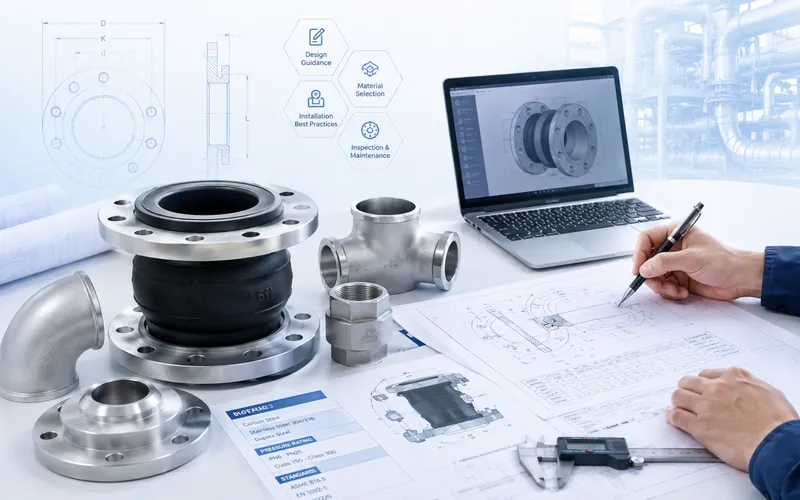
The most recognizable feature of a single sphere rubber expansion joint is one raised elastomeric arch between its two end connections. The flexible body normally includes an inner rubber layer, reinforcing layers and a protective outer cover.
Unlike a rigid steel connector, the elastomeric body can deform within a controlled range. This makes the joint suitable for flexible connection and vibration isolation, but not for supporting pipe weight or independently restraining pipeline thrust.
Main Components
- Inner rubber layer: contacts the process medium and must be chemically compatible with it.
- Reinforcement: improves structural stability and pressure capability.
- Outer cover: protects the reinforcement from the installation environment.
- Single sphere body: provides the flexible movement area.
- End connections: normally flanged, with other connection styles available in specific product ranges.
- Control units: added where pressure thrust, excessive movement or pullout risk must be controlled.
2. Main Functions
Vibration Isolation
Pumps, motors and rotating equipment can generate mechanical vibration. When correctly selected, supported and installed, a rubber expansion joint can reduce part of the vibration transmitted from equipment into the piping system.
A flexible joint cannot correct a piping system in which the pump is carrying unsupported pipe or valve weight.
Reduction of Structure-Borne Noise
The elastomeric body can reduce some structure-borne noise transmitted through rigid piping, making the joint useful in pump rooms, equipment rooms and water-treatment installations.
Limited Axial Movement
A single sphere can compress or extend within its specified range to accommodate limited axial movement and installation tolerance. Installation adjustment must not be treated as unlimited continuous operating movement.
Limited Lateral and Angular Movement
The joint may accommodate limited lateral movement and angular deflection. It should not be used to force severely misaligned pipes or non-parallel flanges into position.
Reduction of Installation Stress
A flexible connection can reduce part of the stress caused by small installation tolerances. The pipework must still be correctly aligned before final tightening.
3. Typical Pump Station Installation Positions
| Position | Main Purpose | Selection Focus |
|---|---|---|
| Near pump suction | Flexible connection and vibration isolation | Vacuum condition, structural support and resistance to inward collapse |
| Near pump discharge | Vibration isolation and limited movement | Pressure thrust, anchors, guides and control units |
| Near valves or check valves | Flexible equipment connection | Valve weight, maintenance clearance and pipe support |
| Water-treatment equipment | Vibration and nozzle-load reduction | Medium compatibility, connection standard and allowable equipment load |
| Water transmission line | Flexible transition and limited movement | Movement direction, anchors, guides and pipeline thrust |
Rubber joints are not automatically required on both sides of every pump. Their need and position must be evaluated according to pump type, suction conditions, piping layout, supports, vibration sources and project specifications.
4. Suction-Side and Discharge-Side Considerations
Suction-Side Service
A pump suction line may operate below atmospheric pressure. If the joint is not designed for the actual vacuum condition, the rubber sphere may deform inward and restrict the flow area.
Suction-side selection should confirm:
- Minimum operating pressure or vacuum;
- Whether the joint is approved for the vacuum condition;
- Whether vacuum support or reinforced construction is required;
- Flow conditions near the pump inlet;
- Independent pipe support;
- Correct orientation and avoidance of air pockets.
Discharge-Side Service
The pump discharge side normally operates under positive pressure. Internal pressure can generate axial thrust across an unrestrained flexible joint, so anchors, guides, control units and allowable pump-nozzle loads must be evaluated.
Discharge-side selection should confirm:
- Normal operating and design pressure;
- Transient conditions caused by pump or valve operation;
- Anchor and guide locations;
- Whether control rods or anti-pullout devices are required;
- Allowable pump and valve nozzle loads;
- The actual movement direction to be accommodated.
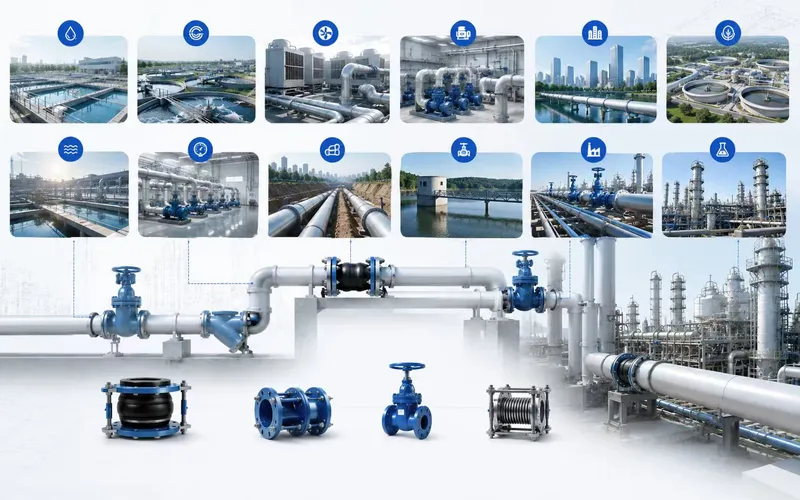
5. Typical Applications
Municipal Water-Supply Pump Stations
Single sphere rubber joints can provide flexible connections between pumps, valves and water-transmission piping. Potable-water requirements, pressure conditions and material documentation must be confirmed.
Wastewater Lift Stations
Wastewater may contain corrosive constituents, solids or other complex substances. The inner rubber material must be selected according to the actual medium.
Water-Treatment Systems
Rubber joints may be used in filtration, circulation, backwashing and equipment-connection lines to reduce vibration transmission.
Industrial Circulating-Water Systems
Long operating periods, changing temperatures, equipment vibration and water chemistry should all be considered during selection.
HVAC Water Systems
Single sphere joints are commonly considered near pumps in chilled-water, cooling-water and equipment-room piping, together with appropriate supports and vibration-control systems.
6. Selection Factors
Operating Medium
Identify whether the medium is clean water, wastewater, circulating water, seawater, oil, chemical solution or another industrial fluid.
Temperature
Provide the normal operating temperature, possible maximum temperature and ambient conditions because temperature affects elastomer performance.
Pressure and Vacuum
Confirm operating pressure, design pressure, test requirements and any possible negative-pressure condition.
Nominal Size and Installation Length
Product dimensions should match the pipeline, equipment connection and available installation space. Non-standard lengths should be approved by drawing.
Flange Standard
Confirm flange outside diameter, drilling, bolt-hole quantity and sealing-face arrangement.
Movement Direction
Distinguish axial compression, axial extension, lateral movement and angular deflection. Combined movement requires technical review.
Control-Unit Requirement
Control rods or other restraint devices may be required where significant pressure thrust, insufficient anchoring, unusual operating conditions or pullout risks are present.
Installation Environment
Outdoor sunlight, ozone, chemicals, humidity, salt exposure, underground rooms and high ambient temperatures may affect material selection.
7. Elastomer Selection
| Material Direction | Typical Consideration | Information to Confirm |
|---|---|---|
| EPDM-type elastomer | Water systems and selected HVAC or industrial fluids | Medium, temperature and hygiene requirements |
| NBR-type elastomer | Selected oil-containing applications | Oil type, concentration, temperature and compatibility |
| CR-type elastomer | Applications requiring selected weathering or medium resistance | Outdoor environment and actual medium |
| Customized elastomer | Special chemicals, temperature or specified project conditions | Complete process-medium information |
Material names provide only an initial selection direction. Mixed or chemical media require confirmation of composition, concentration, temperature and compatibility.
8. Comparison with Other Pipeline Products
Single Sphere vs Double Sphere Rubber Joint
A single sphere design is generally more compact. A double sphere joint has a different installation length and flexibility profile, but it is not automatically superior in every application.
Rubber Joint vs Dismantling Joint
A rubber joint focuses on flexibility and vibration isolation. A dismantling joint focuses on installation adjustment, equipment removal and axial force transmission.
Rubber Joint vs Limit Expansion Joint
A steel limit expansion joint normally uses sleeves, seals and limit devices for controlled axial adjustment. A rubber joint develops flexibility through elastomeric deformation.
Rubber Joint vs Metallic Bellows Joint
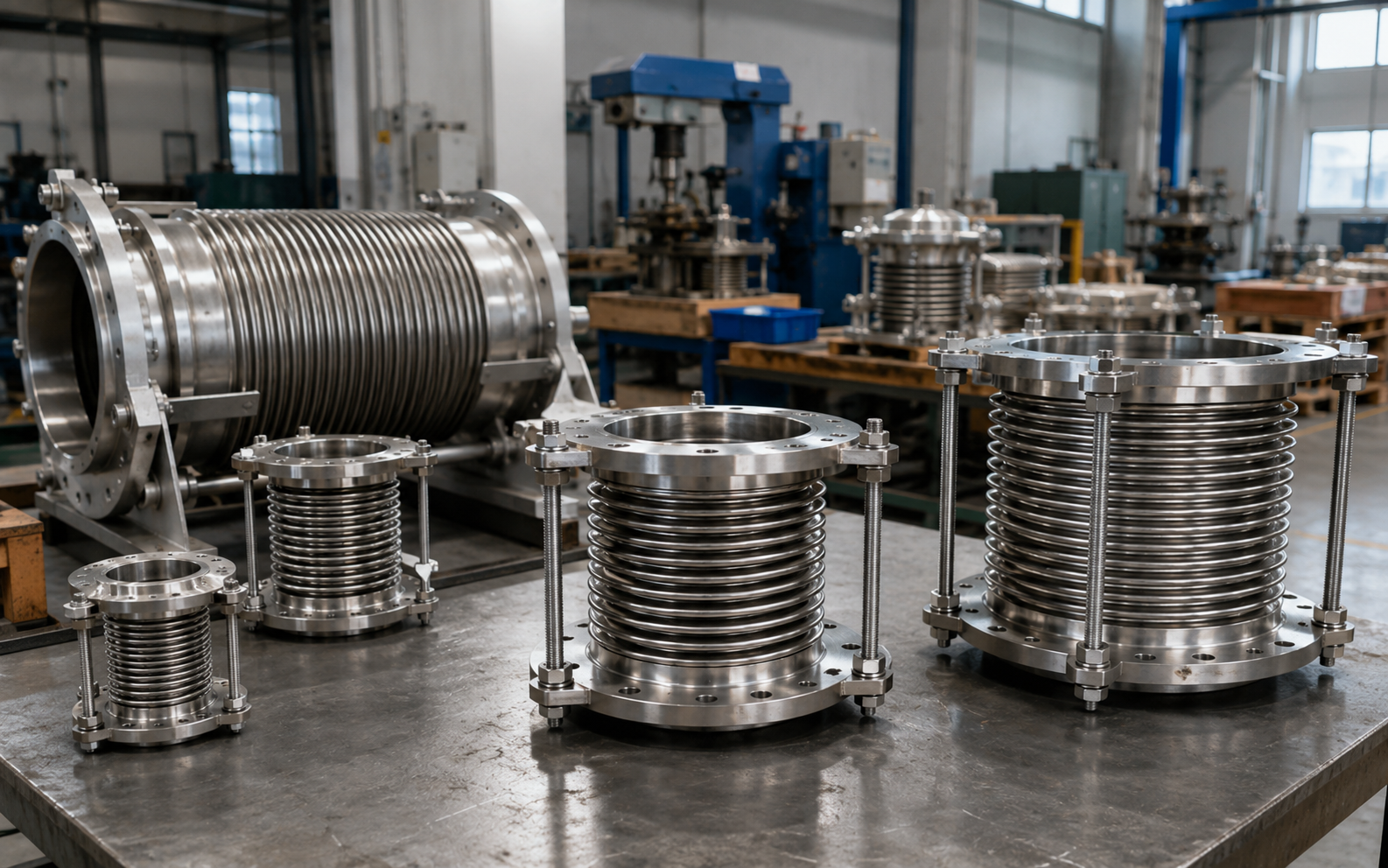
Rubber joints are frequently used for vibration isolation and water-service flexibility. Metallic bellows joints are often selected for engineered thermal movement or higher-temperature conditions.
9. Installation Guidelines
- Inspect before installation: check the rubber body, sealing faces, flanges and control units.
- Align the piping: do not force a joint to correct severe pipe or flange misalignment.
- Provide independent supports: pumps, valves and pipes must not be supported by the rubber joint.
- Control the installed length: do not exceed the permitted compression or extension.
- Tighten bolts evenly: use a gradual cross-tightening sequence.
- Prevent construction damage: protect the rubber from welding sparks, sharp tools, paint and incompatible chemicals.
- Set control units correctly: do not overtighten or leave them incorrectly adjusted.
- Inspect before operation: confirm supports, clearances, flange connections and available movement space.
10. Common Installation Mistakes
- Using the joint to force severely misaligned piping into position;
- Overextending or overcompressing the rubber sphere;
- Allowing the joint to support pipe, valve or equipment weight;
- Ignoring discharge-side pressure thrust and anchoring;
- Using the joint under vacuum without confirming its capability;
- Forcing bolts through mismatched flange holes;
- Exposing the rubber body to welding sparks;
- Allowing the sphere to rub against supports or structures;
- Treating the joint as a water-hammer eliminator;
- Ignoring cracks, bulging, ageing or leakage during service.
11. Inspection and Maintenance
Rubber expansion joints should be included in the pipeline inspection programme. Inspection frequency depends on the medium, temperature, pressure, operating cycles, environment and maintenance requirements.
Items to Inspect
- Cracking, abnormal bulging, separation or ageing of the rubber surface;
- Leakage at flange connections;
- Abnormal extension, compression, twisting or lateral displacement;
- Loose or corroded bolts and control units;
- Movement of anchors, supports or equipment foundations;
- Contact with sharp objects or surrounding structures;
- Changes in operating conditions beyond the original selection basis.
Visible reinforcement, continuing leakage, severe deformation or damaged connecting components require prompt technical inspection.
12. Information Required for Quotation
- Installation position, such as pump suction, pump discharge or pipeline;
- Nominal diameter;
- Operating medium and composition;
- Normal and maximum temperature;
- Operating pressure, design pressure and possible vacuum;
- Flange standard and sealing-face requirements;
- Movement direction and required movement;
- Installation length and available space;
- Anchor, guide and restraint requirements;
- Rubber and metallic material requirements;
- Coating, identification and packaging requirements;
- Project drawings, specifications or datasheets;
- Quantity and destination port.
Non-standard dimensions, special media, vacuum service and combined movements require technical review before quotation.
13. Frequently Asked Questions
Can a single sphere rubber joint be installed on a pump suction line?
It can be considered, but the actual vacuum condition and resistance to inward collapse must be confirmed. A joint selected only for positive pressure should not automatically be used.
Can a rubber expansion joint eliminate water hammer?
No. Water hammer requires appropriate hydraulic analysis, valve control, pressure-management equipment and system design.
Are control rods always required?
Not always. Their need depends on pressure thrust, anchors, allowable equipment loads, movement and pullout risk.
Can the joint support valve or pipe weight?
No. Pipes, valves and equipment require independent supports.
How should the elastomer be selected?
Selection must be based on medium, concentration, temperature, environment and project requirements.
Can the joint be customized?
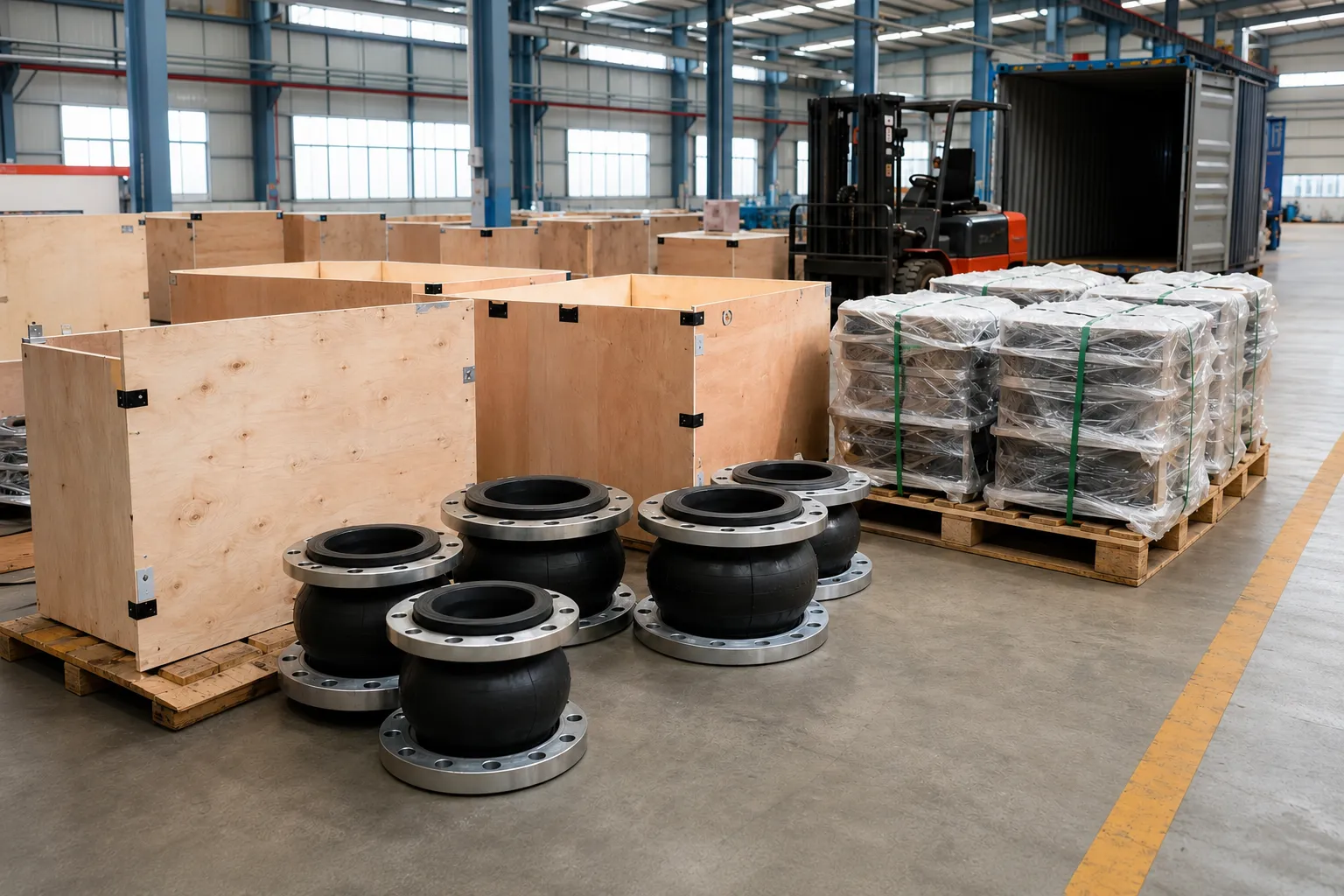
Nominal size, installation length, elastomer, flange standard, metallic components, control units, coating, identification and packaging can be evaluated for customization.
14. Request Selection Support
For pump stations, water-treatment equipment, water-transmission pipelines or industrial circulation systems, provide site photographs, piping drawings, equipment connections, operating medium, temperature, pressure, movement and flange requirements.
We can assist with selecting the joint construction, elastomer, connection arrangement, restraint requirement and customized configuration for the application.
Final technical parameters, dimensions, materials and suitability must be based on mutually confirmed drawings, datasheets, quotations or contract documents.