简体中文
简体中文  English
  日本語
日本語  한국어
한국어  Français
  Deutsch
  Español
  Português
  Русский
  العربية
  ไทย
ไทย  Tiếng Việt

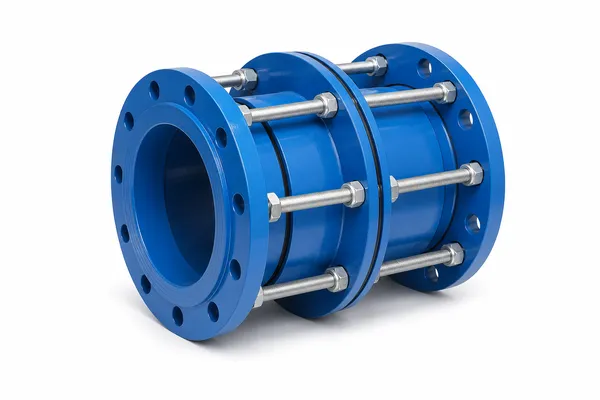
Why Dismantling Joints Matter in Water Treatment Plants
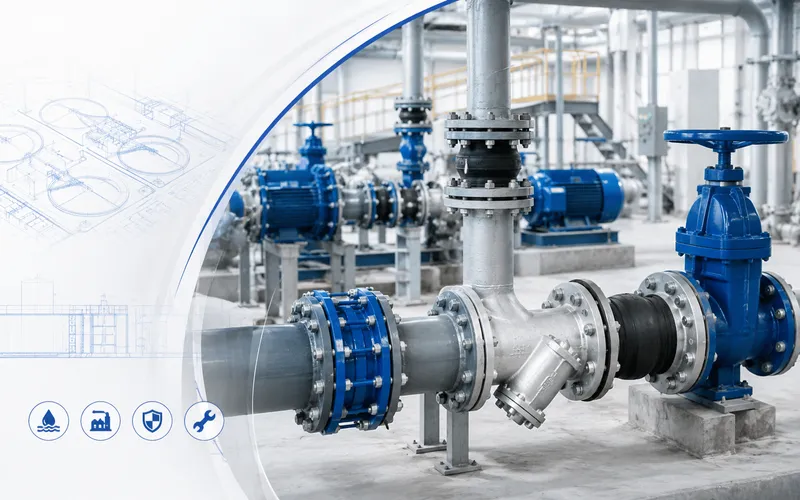
Water and wastewater treatment plants contain many items of flanged equipment that cannot remain permanently inaccessible. Isolation valves, butterfly valves, check valves, flow meters, pumps and strainers may require inspection, repair or replacement during the operating life of the facility.
When equipment is installed between two fixed pipe flanges, removing it can be difficult because there is no axial clearance available to separate the flange faces. A dismantling joint introduces controlled installation adjustment and can later be shortened, after safe isolation and depressurization, to create the space required for equipment removal.
The Maintenance Problem It Solves
Treatment plants are often designed for long operating lives, but individual valves and instruments may need maintenance long before the surrounding pipeline is replaced.
Without a removable connection arrangement, maintenance teams may have to cut pipework, remove an additional spool piece, disturb adjacent equipment or carry out field welding before a valve can be taken out of the line.
A correctly positioned dismantling joint provides a planned maintenance point rather than forcing the maintenance team to create one after a failure occurs.
How a Double-Flange Dismantling Joint Works
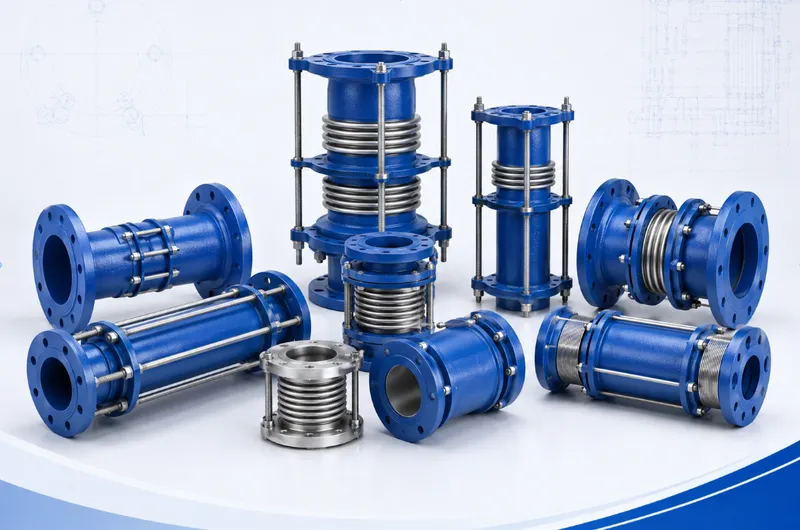
A typical double-flange dismantling joint contains an outer body, telescopic spigot, sealing ring, follower gland, flanged ends and longitudinal tie rods.
During installation, telescopic movement allows the face-to-face length to be adjusted within the approved range. Once the mating flanges, sealing system and tie rods are secured, the assembly becomes a restrained connection.
Its principal functions are to:
- Accommodate limited installation-length tolerances;
- Simplify the positioning of flanged valves and equipment;
- Create clearance for future removal;
- Reduce the need for field cutting and rewelding;
- Restrain the telescopic connection after installation;
- Transmit approved axial forces through the tie-rod arrangement.
Where Dismantling Joints Add Value in a Treatment Plant
Valve Chambers
Large isolation and control valves installed in confined chambers can be difficult to remove because wall clearances, supports and adjacent pipework restrict movement. A dismantling joint can provide controlled removal clearance when it is included in the original layout.
Pump Discharge Assemblies
Pump discharge systems frequently include a check valve, isolation valve, flow meter and other accessories. A dismantling joint can support installation and future removal of one of these components.
The pump, valves and pipework must still be independently supported. The dismantling joint must not carry suspended equipment weight.
Filter and Backwash Systems
Backwash valves, strainers and filter-related equipment may need periodic inspection. A removable pipeline section can reduce the amount of pipework disturbed during scheduled maintenance.
Flow Meter Installations
Meters may require calibration, replacement or internal inspection. A dismantling joint can provide removal space, provided that the meter manufacturer’s straight-pipe, orientation and support requirements remain satisfied.
Wastewater and Sludge Systems
Wastewater installations may expose the joint to oils, chemicals, suspended solids and corrosive atmospheres. The seal, coating, fasteners and maintenance access must therefore be selected from the actual service conditions.
Lifecycle Benefits for Plant Owners and Contractors
More Practical Installation Tolerance
Civil works, prefabricated pipe spools, valve dimensions and equipment foundations can produce small accumulated dimensional differences. An approved adjustment range helps connect the system without forcing misaligned flanges together.
Faster Planned Maintenance
Once the pipeline has been shut down, isolated, drained and independently supported, the joint can be adjusted to release the required flange clearance.
Reduced Site Modification
Planned dismantling access can reduce cutting, welding and replacement of adjacent pipe sections, which is particularly valuable in large-diameter or congested treatment-plant pipework.
Clearer Equipment Replacement Strategy
Designing for future removal helps contractors, operators and maintenance teams understand how a valve or instrument will be replaced before the plant enters service.
Installation Adjustment Is Not Operating Movement
A dismantling joint may look similar to certain telescopic expansion products, but its adjustment range is normally intended for installation and equipment removal.
After the tie rods and sealing components have been correctly secured, a restrained dismantling joint should not be treated as a freely moving thermal expansion joint.
Where continuous axial, lateral or angular movement is expected, the pipeline designer should select a product specifically designed for that movement and confirm anchors, guides and cycle conditions.
Tie Rods, Restraint and Pipe Forces
Internal pressure can generate axial forces across flanged pipeline equipment. The tie-rod arrangement connects the joint components and can transmit axial forces within the approved design conditions.
The following details require confirmation:
- Number and distribution of tie rods;
- Rod diameter, material and length;
- Nut, washer and flange arrangement;
- Flange thickness and drilling;
- Operating and design pressure;
- Connected valve and equipment construction;
- Pipe anchors, guides and structural supports.
Tie rods do not eliminate the need for a verified piping load path. The project designer remains responsible for anchors, valve support, equipment loads and overall system integrity.
Materials for Water and Wastewater Service
Body and Flanges
Body, spigot, gland and flange materials should be selected according to the pipe system, nominal size, pressure, fabrication requirements and project specification.
Sealing Elastomer
Water-compatible elastomer compounds are commonly evaluated for clean water and general wastewater service. Oil, solvents, chemicals, disinfectants and elevated temperature may require a different compound.
Potable Water Requirements
The name of the base elastomer alone does not demonstrate potable-water suitability. The specific compound and project-required documentation must be confirmed.
Fasteners and Tie Rods
Fastener materials and surface protection should be reviewed for indoor, outdoor, buried, humid, coastal and chemically aggressive locations.
Corrosion Protection in Treatment Environments
Treatment facilities may expose metallic components to condensation, standing water, chemical vapours, outdoor weather and corrosive wastewater atmospheres.
Specify where applicable:
- Internal and external coating system;
- Surface preparation;
- Required coating thickness and colour;
- Potable-water contact requirements;
- Buried or submerged protection;
- Tie-rod, nut and washer protection;
- Transport and installation damage protection;
- Approved site-repair procedure.
Flange Compatibility Must Be Confirmed
Water-treatment projects may use EN, ASME, AWWA, JIS, BS or other flange systems. Equal nominal size or a similar rating designation does not prove dimensional compatibility.
The RFQ should identify:
- Complete flange standard;
- DN or NPS size;
- PN, Class, K or other rating;
- Flange facing;
- Mating valve or equipment drawing;
- Flange outside diameter and thickness;
- Bolt-circle diameter;
- Bolt-hole quantity and diameter;
- Gasket and bolting requirements.
Rehabilitation projects should be checked against actual mating dimensions rather than the old equipment description alone.
Plan the Position Around the Valve
There is no universal rule requiring every dismantling joint to be installed on the same side of every valve.
The final position depends on:
- Valve construction and maintenance instructions;
- Direction in which the valve must be removed;
- Flow direction;
- Available chamber or plant-room space;
- Lifting access;
- Pipe anchors and supports;
- Adjacent meters, check valves and strainers;
- The approved piping layout.
Some valve arrangements favour a downstream dismantling joint, while other layouts may require an upstream position. Maintenance access should be resolved during design, not after commissioning.
Selection Checklist for Water Treatment Projects
- Plant type and process area;
- Equipment connected to the joint;
- Nominal size;
- Required face-to-face length;
- Operating medium and composition;
- Normal and maximum temperature;
- Operating, design and test pressure;
- Flange standard, rating and facing;
- Body, flange, seal and tie-rod materials;
- Coating and corrosion environment;
- Pipe anchors, supports and axial loads;
- Required valve-removal direction and clearance;
- Inspection and documentation requirements;
- Quantity, packing and destination.
Common Specification Mistakes
- Selecting only by nominal size and pressure designation;
- Failing to confirm the mating flange standard;
- Treating installation adjustment as continuous operating movement;
- Allowing the joint to support a valve or pipe section;
- Ignoring tie-rod loads and the piping load path;
- Using the joint to force severely misaligned flanges together;
- Providing no lifting or removal clearance;
- Ignoring oils and chemicals in wastewater;
- Assuming an elastomer name proves potable-water compliance;
- Protecting the body but not the rods and fasteners;
- Adding third-party inspection after production;
- Adjusting the joint while the pipeline is pressurized.
Request Project-Based Dismantling Joint Support
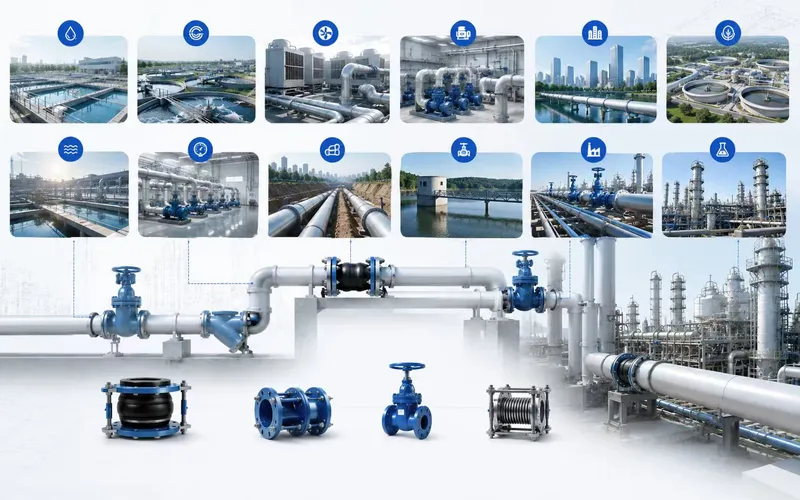
For water-treatment plants, wastewater facilities, pumping stations, valve chambers and transmission pipelines, provide the piping layout, valve drawing, flange standard, installation gap, medium, temperature, pressure and maintenance requirements.
We can assist with evaluating the dismantling-joint construction, face-to-face length, flanges, sealing material, tie-rod configuration, coating, inspection documents and project-specific customization.
Final construction, dimensions, materials, pressure conditions, axial loads, documentation and supply scope must follow the mutually approved drawing, datasheet, quotation, purchase order or contract.