 简体中文
简体中文  English
  日本語
日本語  한국어
한국어  Français
  Deutsch
  Español
  Português
  Русский
  العربية
  ไทย
ไทย  Tiếng Việt
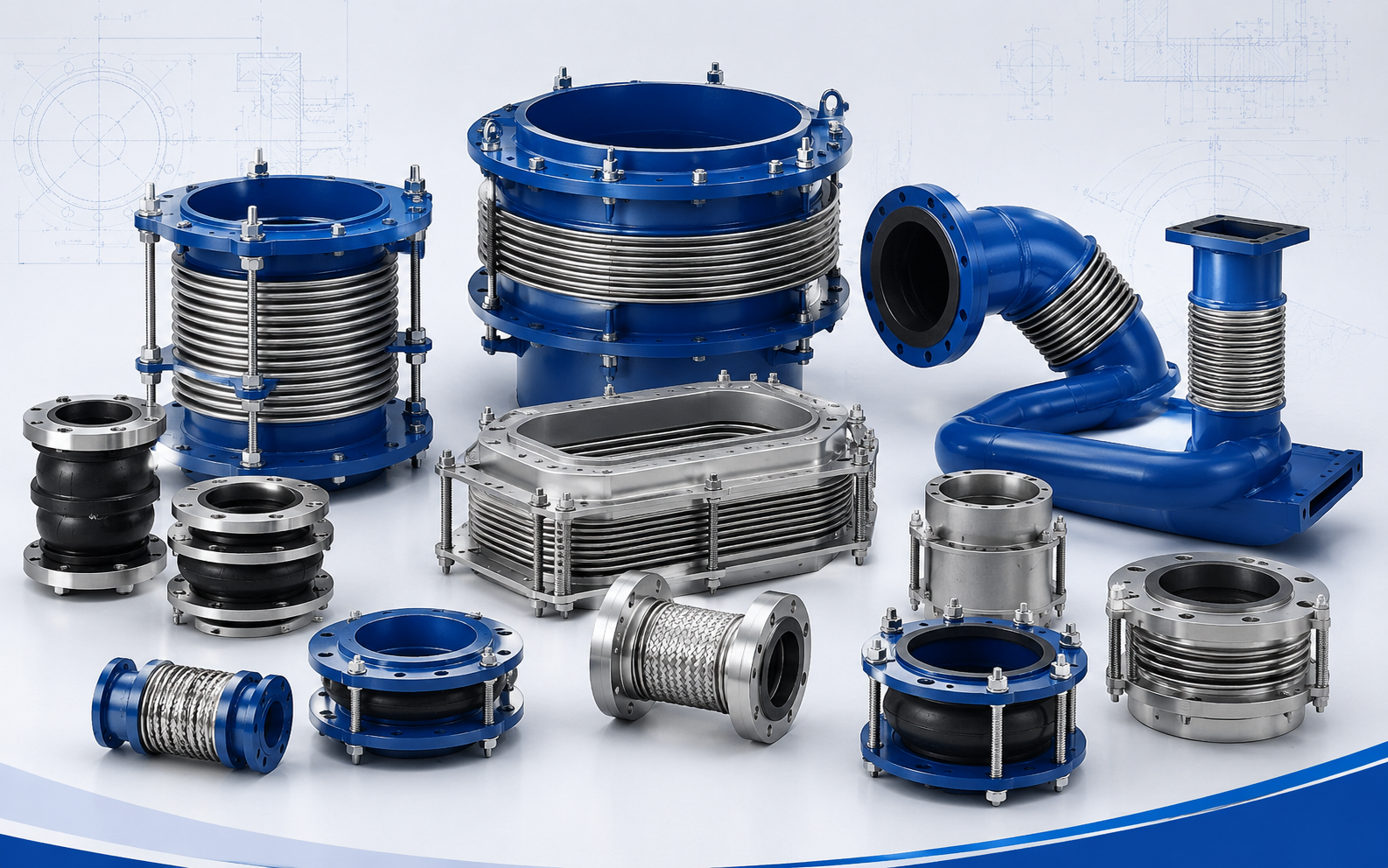
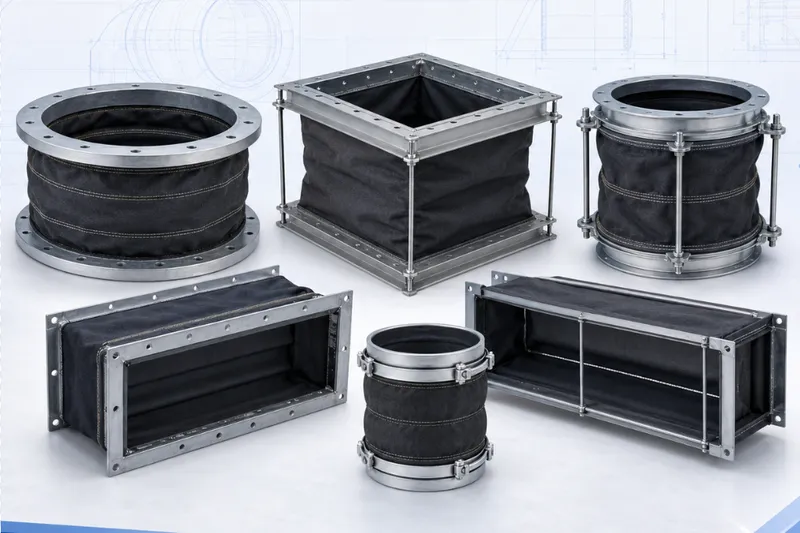
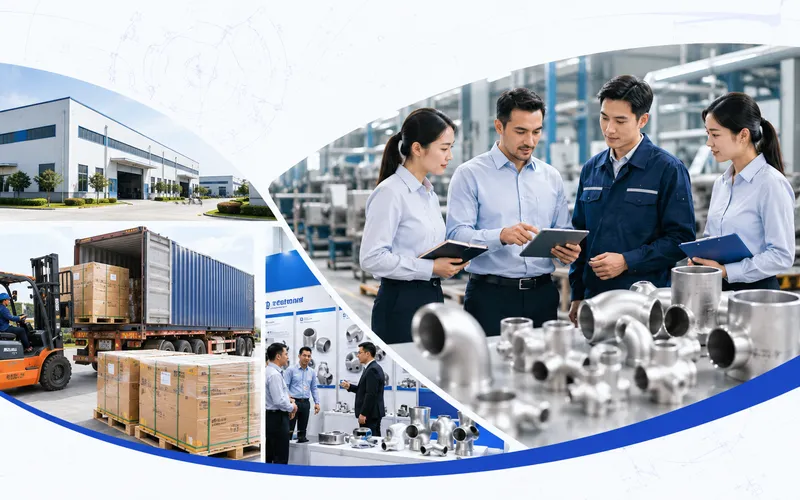
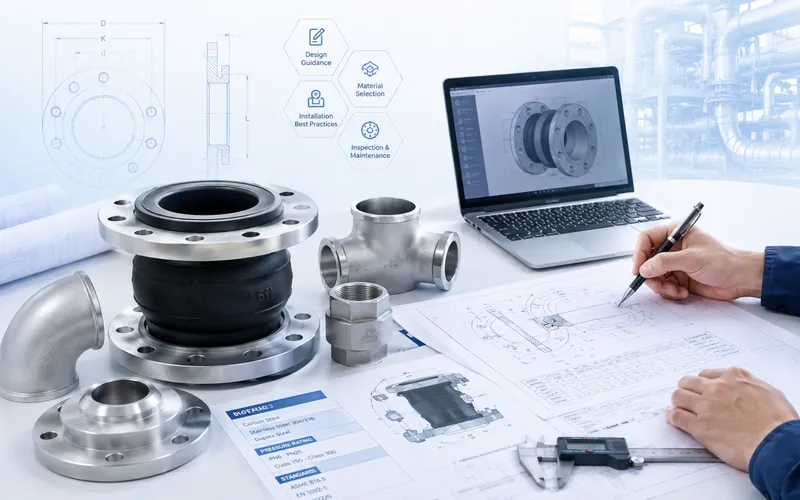
产品概述
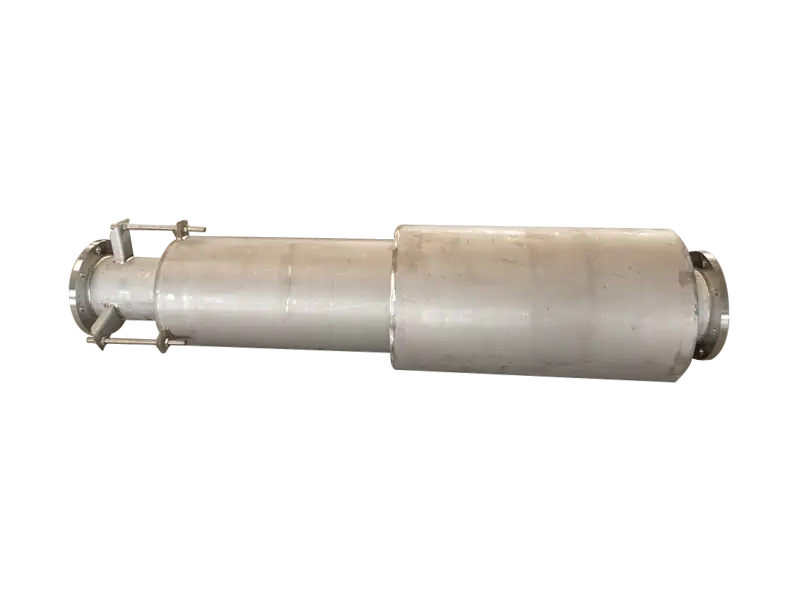
Externally Pressurized In-Line Pressure-Balanced Expansion Joint
This expansion joint is engineered for straight piping systems that require substantial axial movement but cannot accept the full pressure thrust normally produced by an unrestrained bellows.
It combines an externally pressurized working bellows with a balancing bellows and an internal load-transfer system. The working section accommodates pipe expansion, while the balancing section reduces thrust transmitted to anchors and equipment nozzles.
Why This Design Is Used
A conventional axial expansion joint absorbs thermal movement, but process pressure acting on the effective bellows area creates a significant axial thrust. This force normally has to be resisted by a main anchor.
Large main anchors may be impractical on elevated pipe racks, short runs between major equipment, or installations with restricted structural space.
The in-line pressure-balanced arrangement contains most of the pressure thrust within the assembly, reducing the load imposed on the external piping system.
Purpose-Built Construction
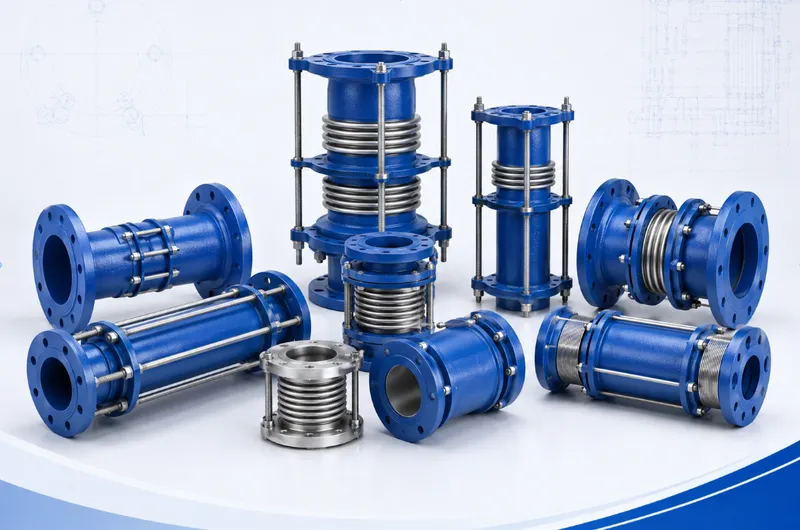
The assembly normally includes an externally pressurized working bellows, a balancing bellows, an internal flow pipe, an outer casing, pipe ends and permanent structural load-transfer components.
The working bellows accommodates axial movement. The balancing bellows develops an opposing pressure force, while structural plates, rods or equivalent components transfer the resulting loads internally.
The outer casing forms part of the external-pressure arrangement and protects the internal bellows during handling, installation and operation.
Axial Movement Cycle
As the connected pipe heats up, the straight pipe section expands and the working bellows compresses.
During cooling, the pipe contracts and the bellows extends in the opposite direction. The movement remains concentrated along the pipeline centerline.
Process pressure is directed to the outside surface of the working bellows. External pressurization supports bellows stability where a longer bellows element or relatively large axial travel is required.
Internal Pressure-Thrust Balance
The working and balancing bellows are arranged with coordinated effective areas. Line pressure produces opposing axial forces within the expansion-joint assembly.
Permanent structural components connect the working and balancing sections and transfer the pressure-related forces internally.
This reduces net pressure thrust transmitted to the main anchors and connected equipment.
Bellows spring force, pipe weight, support friction, dynamic flow loads and other system forces are not eliminated and must still be considered.
Difference from a Standard Externally Pressurized Joint
A standard externally pressurized axial expansion joint is selected mainly for axial stability and large movement capability. It normally still transfers pressure thrust to the main anchors.
This pressure-balanced version adds a balancing bellows and internal load path, providing both axial movement compensation and pressure-thrust reduction.
A standard externally pressurized joint may be suitable where strong main anchors are available. The pressure-balanced version is preferred where anchor or equipment-nozzle loads are restricted.
Suitable Project Conditions
- Straight piping with substantial axial thermal movement
- Elevated piping where large main anchors are difficult to construct
- Short pipe runs between vessels or major equipment
- Equipment nozzles with limited allowable external loads
- Heating and steam systems requiring large axial travel
- Installations requiring an outer casing around the bellows
Movement Limitations
The joint is primarily designed for axial compression and axial extension. It should not be used as a general-purpose lateral or angular expansion joint.
Piping systems with significant lateral, angular or three-dimensional movement require a universal, hinged, gimbal or another engineered configuration.
Piping-System Integration
Pressure balancing reduces the pressure load on main anchors, but appropriate anchors, guides and load-bearing supports remain necessary.
Pipe guides maintain alignment and direct thermal movement through the expansion joint centerline.
Pipe, valve, insulation and process-medium weight should be carried by independent supports rather than by the expansion joint.
Installation Control Points
- Confirm orientation and installation position from the approved drawing
- Verify the cold face-to-face length and preset condition
- Maintain accurate alignment of the connected piping
- Do not force the joint to correct pipe-length errors
- Do not apply lateral movement or torsion to the bellows
- Do not remove permanent load-carrying or balancing components
- Handle shipping restraints according to the installation instructions
- Protect internal bellows and guides during site welding
Project Data Required
Selection requires more than nominal pipe size. Axial movement, pressure thrust, equipment load limits and piping support conditions must be reviewed together.
- Pipe size and end-connection arrangement
- Design and operating pressure
- Installation, operating and excursion temperatures
- Process medium and corrosion conditions
- Required axial compression and extension
- Required cycle life
- Anchor and equipment-nozzle load limitations
- Available face-to-face and radial space
- Inspection, cleaning and documentation requirements
Final bellows arrangement, materials, effective-area relationship, movement capacity, spring rate and external connection loads are subject to the approved technical specification, design calculations and manufacturing drawing.
常见问题
What movement does External-Pressure Straight-Pipe Pressuer-Balanced Expansion Joint compensate?⌄
What is the purpose of a pressure-balanced design?⌄
How is bellows material selected?⌄
Are guides and anchors required?⌄
What information is needed for a quotation?⌄
Can this product be customized by project drawing?⌄
What inspections are made before shipment?⌄
How are packing and export documents confirmed?⌄
Need the Right External-Pressure Straight-Pipe Pressuer-Balanced Expansion Joint for Your Project?
Get professional solutions and competitive quotes from our engineering team.